


Railway DC Converter Standard for Electrical Engineering: May 2026 Release
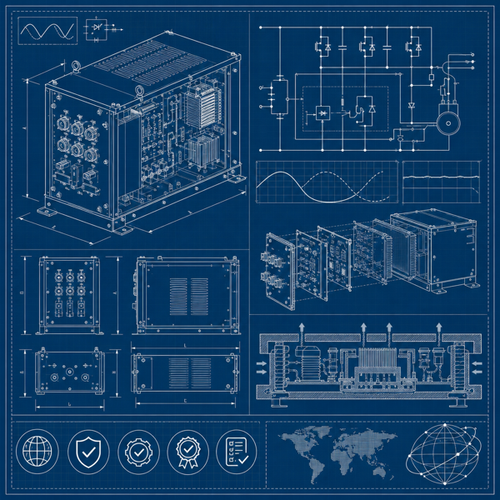
Major Update: Railway DC Converter Standards Now Published – May 2026
The electrical engineering sector marks a significant milestone this May 2026 with the publication of a crucial new standard, FprEN IEC 62590-2-2:2025. Developed for railway applications, this comprehensive guideline establishes detailed requirements for controlled electronic power converters used in fixed installations supporting DC traction systems. Covering rectifiers, inverters, and their reversible configurations, the standard impacts a broad range of professionals—from system integrators to equipment manufacturers—and aims to significantly elevate power supply reliability, safety, and energy efficiency across railway networks worldwide.
Overview / Introduction
The railway industry is in the midst of a technological transformation, driven by demands for higher operational efficiency, energy savings, system interoperability, and passenger safety. Electrical power conversion systems at railway substations form the backbone of this evolution, directly influencing service quality, operational costs, and infrastructure longevity.
Industry standards—such as those produced by the International Electrotechnical Commission (IEC) and European Committee for Electrotechnical Standardization (CLC)—are critical to harmonizing requirements, ensuring compatibility, and streamlining procurement and design decisions. By addressing the function, performance, and safety protocols for DC traction power electronic converters, FprEN IEC 62590-2-2:2025 equips professionals with the knowledge and specifications needed to meet both regulatory and operational challenges.
This article comprehensively examines the newly published standard, distilling its technical depth into actionable insights for electrical engineering practitioners, managers, railway operators, and compliance teams. Readers will gain a clear understanding of the scope, core requirements, and implementation strategies necessary to remain at the forefront of industry compliance and innovation.
Detailed Standards Coverage
FprEN IEC 62590-2-2:2025 – Controlled Converters for DC Railway Applications
Railway applications – Electronic power converters for fixed installations – Part 2-2: DC Traction applications – Controlled converters
This newly published standard defines the essential functionalities, requirements, interfaces, and test methodologies for controlled electronic power converters utilized in fixed DC traction installations including railways, metros, tramways, trolleybuses, automated transport systems, and electric road systems. It is part of the broader IEC 62590 series, which comprehensively covers electronic power converters for railway infrastructure.
What this standard covers & its scope:
- Applies to AC/DC converters (rectifiers, inverters, and their combination) and DC/DC converters in fixed railway installations utilizing DC traction.
- Specifies requirements for line-commutated and self-commutated converter types, focusing on their ability to control and influence power flow between three-phase AC networks and DC traction systems.
- Encompasses interface specifications, performance criteria, safety protocols, and required test methodologies for manufacturers and system operators.
- Addresses configurations for reversible power flow—including energy recovery during regenerative braking—and for connections to energy storage systems (ESS) and auxiliary DC networks.
Key requirements and specifications:
- Functional operations: Mandates the working principles for rectifiers, inverters, and reversible converters capable of controlled, bidirectional power flow.
- Integration and system design: Stipulates coordination between transformers, valve assemblies, sensors, and control logic for robust operational performance.
- Protection and safety: Requires comprehensive protection features, including short-circuit withstand, insulation ratings, marking/identification, and fail-safe behavior during commutation failures.
- Performance and testing: Defines rigorous test regimes—visual inspection, insulation testing, operational sequencing, light and load testing, temperature rise measurements, EMC compliance, harmonic analysis, and mechanical tests.
- Compatibility: Ensures that converter design and characteristics are compatible with both three-phase AC supply and DC traction network specifics, including proper synchronizations, voltage/current characteristics, and filtering arrangements.
- Interoperability: Provides guidance for integrating energy storage units (ESU) and managing connections with other DC systems or wayside braking resistors.
Who needs to comply:
- Railway infrastructure owners and operators
- Manufacturers and suppliers of electronic power converters, traction substations, and related control systems
- Systems integrators involved in railway electrification projects
- Engineers responsible for maintenance, commissioning, or upgrading existing electrical installations for DC traction systems
- Regulatory and quality assurance professionals overseeing railway safety and performance compliance
Practical implications for implementation:
- Standardizes converter specifications, simplifying procurement and vendor comparison.
- Ensures consistent power quality and reliable operation across varying loads and network conditions.
- Reduces risks associated with misoperation, equipment failure, or incompatibility in multi-vendor environments.
- Encourages adoption of energy recovery and storage strategies by specifying safe and reliable reversible converter operation.
- Supports lifecycle management by outlining periodic verification and testing protocols.
Notable changes from previous versions:
- Clearer distinction between line commutated and self-commutated technologies, including implications for transformer and valve device coordination.
- More detailed requirements for system integration—especially in the context of bidirectional converters and network interoperability.
- Expanded test protocols for EMC, harmonics, and power factor, reflecting modern environmental and operational challenges.
- Updated definitions, symbols, and references, aligning with the latest editions of related international standards such as IEC 60529, 62590-1, 62695, 60850, and 62236 series.
Key highlights:
- Comprehensive coverage of both one-way and reversible AC/DC/DC converter configurations
- Robust testing and verification methodologies enhance safety, quality, and predictability
- Supports integration of modern power electronic devices, including insulated gate bipolar transistors (IGBTs) and energy storage systems
Access the full standard:View FprEN IEC 62590-2-2:2025 on iTeh Standards
Industry Impact & Compliance
The adoption of FprEN IEC 62590-2-2:2025 will significantly influence the electrical engineering and railway sectors:
- Operational reliability: By mandating uniform design and performance expectations, the standard facilitates dependable power supply for high-capacity passenger and freight services.
- Energy efficiency: Provisions for reversible converter operation enable the capture and reintegration of regenerative braking energy, yielding substantial energy savings and lower operational expenditure.
- Interoperability: Harmonized requirements reduce technical barriers between equipment from different suppliers and across regional markets, streamlining procurement and cross-border projects.
- Safety & risk mitigation: Enhanced protection and testing regimes minimize equipment damage, safeguard operational personnel, and ensure continued service during abnormal events such as commutation failures or short circuits.
- Quality assurance: The defined methodologies for type and routine testing enable clear benchmarks for initial commissioning and periodic maintenance, ensuring ongoing conformance.
Compliance considerations and timelines:
- The standard is effective from its publication date (May 2026), with organizations advised to transition their specifications for new procurement and upgrade projects accordingly.
- Early adoption is recommended for projects in the design or tendering phase to maximize benefits of uniformity and future-proofing.
- Existing installations may consider a phased implementation for upgrades or expansions, aligning periodic maintenance schedules with the standard.
Benefits of adopting this standard:
- Simplifies specification drafting for procurement
- Reduces integration issues in multi-vendor scenarios
- Heightens confidence in safety and operational reliability
- Enables access to expanded supply chains and technical support
Risks of non-compliance:
- Coverage lapses in insurance or regulatory certification
- Increased operational downtime due to incompatibility or equipment failure
- Potential safety incidents resulting in reputational or legal consequences
Technical Insights
Common technical requirements across DC traction converter standards:
- System integration: Coordination of transformers, valve assemblies, sensors, and controllers is critical for both new and retrofitted installations. All primary operating points—such as rated current, voltage, and intended power flow—must be clearly defined in user specifications.
- Converter types and control: The standard distinguishes between line commutated and self-commutated converters, advising on appropriate configurations for each application. Self-commutated converters with IGBT technology, for example, offer superior modulation and enable both rectification and inversion.
- Protection systems: Implement comprehensive protection schemes, including insulation co-ordination (referencing IEC 60071-1), fault detection, rated short-time withstand, and emergency disconnects.
- Power quality and harmonics: EMC requirements and harmonic limits are detailed, with protocols for testing and filtering to meet operational and environmental standards. Careful selection and placement of filter circuits, transformer winding configurations, and pulse patterns reduce harmonics and interference with railway signaling.
- Reliability against failures: Design for failure modes such as commutation failure (short circuits in inverters). The standard mandates that such failures must be managed by inherent circuit protections without damaging the converter or affecting adjacent substations.
- Testing and certification: Thorough type and routine testing ensures products conform with performance and safety benchmarks. This includes insulation tests, temperature rise assessments, operational sequencing, functional tests, and mechanical robustness checks.
Implementation best practices:
- Define operational parameters: Specify all relevant current and voltage ratings, load cycles, and control ranges at the project outset.
- Engage cross-functional review: Involve engineering, procurement, operations, and safety teams in the specification and evaluation phase.
- Select appropriate testing partners: Work with accredited laboratories for routine and type testing as defined in the standard's annexes.
- Maintain rigorous documentation: Keep comprehensive records of all test results, certifications, and commissioning activities for compliance audits and troubleshooting.
- Monitor for updates: As this standard interfaces with evolving EMC and power quality guidelines, maintain regular review cycles to incorporate addenda or revisions.
Testing and certification considerations:
- Conduct all specified tests prior to commissioning and at scheduled maintenance intervals
- Ensure personnel are fully trained on safety, measurement techniques, and interpretation of test outcomes
- Insist on traceable calibration records for all measurement instruments
Conclusion / Next Steps
The May 2026 publication of FprEN IEC 62590-2-2:2025 marks a major advance in harmonizing and elevating technical expectations for DC traction power supply converters in railway infrastructure. By embracing these unified requirements, organizations position themselves at the leading edge of operational safety, energy efficiency, and cost-effectiveness.
Key takeaways:
- The new standard provides an essential framework for specifying, designing, testing, and maintaining controlled power converters for fixed installations.
- Robust testing and performance protocols afford confidence in operational reliability and asset lifespan.
- Adherence simplifies procurement, compliance, and future upgrades, lowering total lifecycle costs.
Recommendations:
- Initiate or update internal standards and procurement documentation to reflect the new requirements.
- Share training and technical guidance documents with project, maintenance, and compliance teams.
- Consult iTeh Standards for full access to the standard, updates, and related publications.
Explore the full details and official documentation:View FprEN IEC 62590-2-2:2025 on iTeh Standards
Stay informed and prepared—leverage the latest international standards to future-proof your railway and electrical engineering projects.
Categories
- Latest News
- New Arrivals
- Generalities
- Services and Management
- Natural Sciences
- Health Care
- Environment
- Metrology and Measurement
- Testing
- Mechanical Systems
- Fluid Systems
- Manufacturing
- Energy and Heat
- Electrical Engineering
- Electronics
- Telecommunications
- Information Technology
- Image Technology
- Precision Mechanics
- Road Vehicles
- Railway Engineering
- Shipbuilding
- Aircraft and Space
- Materials Handling
- Packaging
- Textile and Leather
- Clothing
- Agriculture
- Food technology
- Chemical Technology
- Mining and Minerals
- Petroleum
- Metallurgy
- Wood technology
- Glass and Ceramics
- Rubber and Plastics
- Paper Technology
- Paint Industries
- Construction
- Civil Engineering
- Military Engineering
- Entertainment