


January 2026: New Standards Advance Electrical Engineering Safety and Reliability
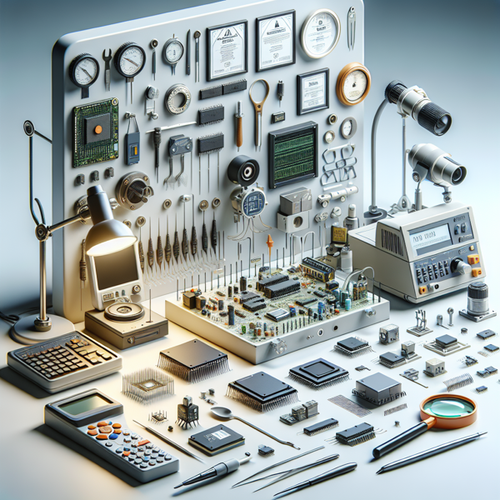
The new year brings a suite of critical updates for electrical engineering professionals, with the publication of five influential standards in January 2026. These newly released guidelines address core safety challenges, efficiency boosts, and compliance clarity in hazardous gas detection, rotating machine operation under unbalanced voltages, ferrite core inductance tolerances, HVDC system planning, and quality requirements for high-frequency surface mount inductors. As electrical systems become more interconnected and demanding, these standards are poised to set the benchmark for global safety, operational excellence, and robust innovation.
Overview / Introduction
Electrical engineering continues to drive technological progress in infrastructure, manufacturing, energy, communications, and automation. International standards are essential for ensuring safety, interoperability, performance, and cost-effectiveness in everything from industrial plants to the most sensitive electronics. This month, January 2026, sees the introduction of five new or revised standards that impact designers, plant engineers, compliance leaders, procurement teams, and researchers across the sector.
In this article, you’ll find:
- Concise overviews of each of the five new or updated standards
- Guidance on key requirements, target applications, and implementation
- Discussion of sector-wide compliance and business impact
- Technical insights and best practice guidance
Detailed Standards Coverage
EN IEC 60079-29-0:2026 – Gas Detection Equipment for Explosive Atmospheres
Explosive atmospheres – Part 29-0: Gas detection equipment – General requirements and test methods
This foundational standard defines the universal requirements and accepted testing procedures for equipment designed to detect flammable, oxygen-deficiency, and toxic gases in industrial and commercial locations where explosive atmospheres may form. The standard encompasses gas detectors that provide essential safety outputs—such as alarm signals or shutdown capabilities—for worker and property protection.
Key requirements focus on the construction of gas detection equipment for:
- Flammable gas detection (mines and general industry)
- Oxygen deficiency/enrichment
- Toxic gases (including safety monitoring and occupational exposure)
- Open path (remote sensing) gas detection
This edition consolidates, revises, and supersedes multiple previous documents, streamlining global best practice. Major updates include harmonized test procedures for new equipment types (including open-path and occupational exposure monitoring), expanded environmental testing, and unified labelling and performance verification. The document clearly delineates what applications and scenarios are outside its scope (such as domestic, medical, or laboratory-only equipment).
Key highlights:
- Harmonized general and functional requirements for all relevant types of industrial and commercial gas detection equipment
- Comprehensive suite of performance and environmental test methods (vibration, drop, calibration, environmental conditions, EMC, and more)
- Cancelled and replaced several earlier standards for coverage, clarity, and consistency
Access the full standard:View EN IEC 60079-29-0:2026 on iTeh Standards
IEC 60034-26:2026 – Impact of Unbalanced Voltages on Three-Phase Cage Induction Motors
Rotating electrical machines – Part 26: Effects of unbalanced voltages on the performance of three-phase cage induction motors
Induction motors are a backbone of industrial automation and large-scale energy systems. This updated standard addresses the significant risks and performance degradations that can occur when three-phase cage induction motors are supplied by unbalanced voltages—a common but potentially destructive occurrence in distributed power networks.
The standard provides:
- Quantitative analysis of how unbalanced voltages elevate winding currents, increase heating, reduce torque, lower efficiency, and threaten the rated performance
- Methods for analyzing and calculating voltage unbalance and required derating factors to prevent overheating or damage
- Clear recommendations for permissible voltage unbalance and precautions for continued safe operation
- Updated technical content aligned with IEC 60034-12 (including design NE), and explicit clarification that all referenced voltages are line-to-line
This revision is essential reading for facilities, operations, and maintenance teams as it helps optimize motor reliability, extend equipment life, and comply with safety codes.
Key highlights:
- Defines current and temperature consequences of even modest voltage unbalance (with graphical and analytical methods)
- Recommends derating practices and maximum safe operating limits
- Incorporates new guidance for NE design motors under revised IEC 60034-12
Access the full standard:View IEC 60034-26:2026 on iTeh Standards
IEC 62358:2026 – Standard Inductance Factor for Gapped Ferrite Cores and Tolerance
Ferrite cores – Standard inductance factor for gapped cores and its tolerance
Ferrite cores are vital for high-frequency power transfer in transformers, inductors, and magnetic components. The third edition of this standard sets out agreed global practices for defining inductance factors (AL values) and precise tolerances for a broad range of gapped ferrite core types, including Pot, RM, ETD, E, EER, EP, PQ, PM, EC, EFD, and low-profile variants.
This update answers the needs of manufacturers and system designers seeking fast-delivery, interchangeability, and reliable sourcing by:
- Adding new AL values and tolerances for PM, EC, and EFD core families, aligning with the latest technology and inventory methods
- Endorsing standardized test methods (per IEC 62044-2)
- Clarifying the measurement method and the preferred number series for inductance factor selection
Practical application ensures users specify AL values from standardized tables, boosting reliability and simplifying procurement while minimizing custom inventory and the risk of supply chain mismatches.
Key highlights:
- Expanded standard coverage with new core types and tolerance tables
- Streamlines core selection for design, sampling, and production
- Facilitates fast, standardized procurement across global markets
Access the full standard:View IEC 62358:2026 on iTeh Standards
IEC TR 63179:2026 – Planning of High-Voltage Direct Current (HVDC) Systems
Planning of HVDC systems
As the global energy sector pivots toward long-distance, efficient, and renewable-friendly power transmission, the technical planning of HVDC systems becomes crucial. This Technical Report assembles best practices, general principles, and detailed methodologies for selecting and commissioning HVDC links with line-commutated converter (LCC), voltage-sourced converter (VSC), or hybrid schemes.
Content includes:
- Decision matrices for HVDC versus AC system deployment
- Key steps in scheme identification, including converter selection, parameter setting, grid stability, and technical-economic evaluation
- Guidance on system integration (back-to-back, point-to-point, and multi-terminal configurations)
- Analysis of interface requirements, grid connection, and system control (LCC vs. VSC comparisons)
- Economic assessment principles, risk evaluation, and best practice recommendations
Targeted at transmission planners, project developers, utilities, and system integrators, this report empowers successful HVDC project delivery in an evolving electrical grid.
Key highlights:
- Comprehensive, step-by-step guide to system planning, comparison, and design
- Thorough coverage of technical, economic, and integration challenges
- Applicable to new installations and expansion of existing DC grids
Access the full standard:View IEC TR 63179:2026 on iTeh Standards
prEN IEC 62674-1:2024 – Fixed Surface Mount Inductors for Electronic and Telecom Equipment
High frequency inductive components – Part 1: Fixed surface mount inductors for use in electronic and telecommunication equipment
Surface mount inductors are the backbone of modern high-frequency circuits in communication and automation. January 2026 sees the second edition of this international standard, bringing:
- Updated dimensions, tolerance criteria, and performance expectations for D-shaped and K-shaped inductors
- Guidance on mechanical, electrical, and environmental characteristics including nominal inductance/impedance, Q factor, operating temperature ranges, and quality assurance procedures
- Revised measurement methods and new environmental durability checks (such as resistance to soldering heat, vibration, and climatic exposure)
The standard directs manufacturers, OEMs, and quality teams to harmonized benchmarks that ensure reliability in harsh operational conditions and high-density circuit designs.
Key highlights:
- Expanded size and tolerance options for new application demands
- Clearly defined test methods for physical, electrical, and climatic performance
- Strengthens quality assurance and supply chain consistency
Access the full standard:View prEN IEC 62674-1:2024 on iTeh Standards
Industry Impact & Compliance
Adopting these five standards is essential for organizations seeking to safeguard workers, optimize operational efficiency, assure product quality, and maintain regulatory compliance. Key implications include:
- Legal and insurance mandates: Many jurisdictions require compliance with updated gas detection and rotating machinery safety standards, directly impacting liability and insurability.
- Operational reliability: Enhanced guidelines for voltage unbalance, HVDC system design, and passive components reduce risk of failure and operational downtime.
- Procurement and supply continuity: Standardized component specifications (ferrite cores, surface mount inductors) streamline purchasing and reduce inventory complexity.
- Global harmonization: By aligning local practice with international best practice, organizations mitigate risk in global projects and open access to worldwide markets.
- Timeline: Most standards recommend immediate adoption for new purchases and projects. For existing installations, transition plans should be initiated as specified in each document.
Technical Insights
Several technical themes emerge from these January 2026 standards:
- Testing and Verification: All five standards emphasize robust, standardized testing for core parameters—ranging from environmental durability to functional safety and accuracy.
- Interoperability & Compatibility: Consistent definitions and tolerances (for ferrite cores, inductors, and monitoring devices) ensure that products are interchangeable and easily sourced.
- Electromagnetic & Environmental Robustness: Enhanced EMC, environmental, and mechanical endurance testing reflects the demands of modern, connected, and often harsh industrial settings.
- HVDC-Specific Planning: The TR 63179 report offers structured processes for planning transmission upgrades that are scalable and compatible with both legacy and emerging grid technologies.
Best Implementation Practices:
- Review and integrate revised requirements into procurement and design specifications.
- Update maintenance, calibration, and inspection protocols for new equipment or site upgrades.
- Work with certified labs and suppliers to ensure conformity and documentation for each standard.
- Train technical staff and compliance officers on changes versus previous editions.
- For complex topics (e.g., HVDC planning, voltage unbalance mitigation), engage with sector consultants or standards bodies for expert adaptation.
Conclusion / Next Steps
January 2026’s five new and revised electrical engineering standards are essential reading for anyone responsible for safety, reliability, performance, and compliance in the sector. They represent a leap forward in harmonized global practice—protecting people, assets, and business reputation.
Recommended actions:
- Audit current equipment, procedures, and supply contracts against the new requirements
- Engage with iTeh Standards to explore the details of each document, access original texts, and receive the latest updates
- Prioritize staff awareness and training to maximize the benefits of standards adoption
Stay ahead of the curve in a fast-evolving industry: review, implement, and leverage these guidelines to maintain operational excellence and regulatory peace of mind.
Categories
- Latest News
- New Arrivals
- Generalities
- Services and Management
- Natural Sciences
- Health Care
- Environment
- Metrology and Measurement
- Testing
- Mechanical Systems
- Fluid Systems
- Manufacturing
- Energy and Heat
- Electrical Engineering
- Electronics
- Telecommunications
- Information Technology
- Image Technology
- Precision Mechanics
- Road Vehicles
- Railway Engineering
- Shipbuilding
- Aircraft and Space
- Materials Handling
- Packaging
- Textile and Leather
- Clothing
- Agriculture
- Food technology
- Chemical Technology
- Mining and Minerals
- Petroleum
- Metallurgy
- Wood technology
- Glass and Ceramics
- Rubber and Plastics
- Paper Technology
- Paint Industries
- Construction
- Civil Engineering
- Military Engineering
- Entertainment