


January 2026: New Standards Impact Charging, Marking, and UHV Substations in Electrical Engineering
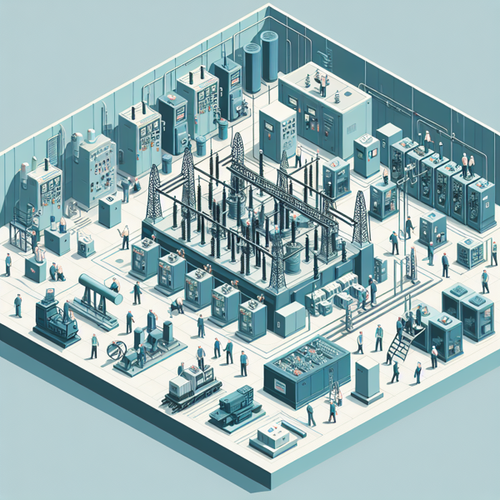
In January 2026, the Electrical Engineering field welcomes a suite of influential international standards. These five newly published documents cover the evolving requirements for electric vehicle (EV) charging interfaces, the essential coding and marking of terminals and conductors, and the specialized maintenance of ultrahigh voltage (UHV) AC substations. Together, these standards lay the foundation for greater safety, efficiency, and interoperability across power infrastructure, transport, and industrial applications. If you manage compliance, quality, engineering, or procurement, this deep dive—Part 1 of 3 on this month's standards—will guide you through critical changes and practical steps for successful implementation.
Overview
The Electrical Engineering sector underpins modern infrastructure and innovation. International standards in this field set consistent benchmarks for safety, efficiency, and interoperability across projects as diverse as electric vehicle charging, residential power systems, and high-voltage utility grids. In this update, we introduce five new and revised standards published in January 2026. You'll discover:
- How new requirements for EV connectors affect the rollout of sustainable transport
- The significance of universal marking and identification rules for electrical equipment terminals and conductors
- Best-practice maintenance for UHV substations, capturing the latest global know-how
- Compliance strategies for urgent regulatory or technical updates
Whether you design, install, inspect, or specify electrical systems, these standards are fundamental to your work.
Detailed Standards Coverage
EN IEC 62196-1:2026 - General Requirements for EV Charging Interfaces
Plugs, socket-outlets, vehicle connectors and vehicle inlets - Conductive charging of electric vehicles - Part 1: General requirements
Chargers and connectors for electric vehicles are set to become more robust, safer, and more universally compatible with the release of EN IEC 62196-1:2026. This fifth edition updates the core requirements for all EV charging accessories—covering plugs, socket-outlets, vehicle connectors, vehicle inlets, and the associated cable assemblies. With rated voltages up to 690 V AC and 1,500 V DC, and currents up to 250 A (AC) and 800 A (DC), this standard addresses the broad needs of today’s and tomorrow’s transport networks.
Scope and Key Requirements:
- Applies to all conductive charging accessories for EVs including tests for control means, mechanical assembly, electrical connection, and environmental robustness.
- Adds new tests for latching devices and retaining means, boosting reliability and safety during use.
- Introduces the inclusion of type 4 accessories, ensuring wider international compatibility.
- Updates requirements for marking, earthing, protection against electric shock, insulation resistance, mechanical strength, and EMC (electromagnetic compatibility).
Target Users:
- Automotive manufacturers, EV charging station suppliers, utility grid operators, safety certifiers, and component suppliers.
Practical Implications: Implementation of this standard will drive harmonization across charging infrastructure and vehicles, reduce market fragmentation, and provide clearer safety guidelines for manufacturers and installers. The revisions foster safer products for end-users and set updated benchmarks for testing and product certification.
Notable Changes from Previous Edition (2022):
- Expanded testing for mechanical connections (latching, retention)
- Recognized type 4 accessory integration
Key highlights:
- Broadened voltage and current operating ranges
- New mandatory mechanical and safety tests
- Aligned with international vehicle charging interfaces
Access the full standard:View EN IEC 62196-1:2026 on iTeh Standards
IEC 60445:2021 - Identification of Equipment Terminals, Conductor Terminations, and Conductors
Basic and safety principles for man-machine interface, marking and identification - Identification of equipment terminals, conductor terminations and conductors
Accurate identification of electrical terminals and conductors is critical for safety and effective maintenance in all electrical installations. IEC 60445:2021 (Edition 7.1) brings the most current guidance, consolidating best practices for color coding, alphanumeric notation, and marking that supports clear identification of equipment terminals and conductor terminations. This revision is a cornerstone for safety across manufacturing, plant operations, panel building, and field maintenance.
Scope and Key Requirements:
- Applies to the marking and identification of terminals on equipment such as resistors, fuses, relays, transformers, contactors, rotating machines, and assemblies
- Sets requirements for color and alphanumeric marking of conductors to avoid ambiguity and enable safe operation
- Defines clear rules for use of green/yellow, neutral, and protective conductors
- Now aligns definitions with IEC 60050-195:2021 and IEC 60050-826
- Newly makes specific color identification requirements mandatory—no longer just recommendations
- Introduces marking rules for protective terminals where equipment has multiple power supply inputs
Target Users:
- Panel builders, control system manufacturers, instrumentation and automation suppliers, facility managers, installers, standard-writing bodies
Practical Implications: This standard supports electrical safety compliance at every project phase—from product design through installation, commissioning, and inspection. It also provides critical guidance for technical committees and standards developers, ensuring industry-wide clarity and harmonization.
Notable Changes from Previous Edition (2017):
- Alignment of terminology with latest IEC vocabularies
- Mandatory color codes for critical conductors
- Guidance on protective terminal marking in multi-input applications
Key highlights:
- Enhanced requirements for color coding and marking
- Expanded definitions for universal industry understanding
- Guidance applicable to both assemblies and discrete devices
Access the full standard:View IEC 60445:2021 on iTeh Standards
IEC 60445:2021 - Reaffirmed: Marking and Identification for Safe Man-Machine Interaction
Basic and safety principles for man-machine interface, marking and identification - Identification of equipment terminals, conductor terminations and conductors
This is a reaffirmation and identical content as above. Multiple publications, reiterations, or adoptions of this standard across different organizations and uses highlight its foundational status in the electrical sector. Maintaining compliance with IEC 60445:2021 is considered an industry best practice and often a legal requirement.
Key highlights:
- Stable, widely adopted international electrical marking guidelines
- Mandatory for new and retrofitted installations in many jurisdictions
- Foundation for harmonized global safety protocols
Access the full standard:View IEC 60445:2021 on iTeh Standards
IEC 60445:2021 - Uniform Approach for Marking and Conductor Identification
Basic and safety principles for man-machine interface, marking and identification - Identification of equipment terminals, conductor terminations and conductors
A third usage, identical to those above, further emphasizes the importance of uniform application and adoption across all regions, industries, and applications. Applying this standard ensures compatibility and clear communication for anyone working on electrical systems, regardless of origin or end use.
Key highlights:
- Prevents dangerous ambiguity and miswiring
- Supports training, auditing, and technical consistency
- Referenced in most regional and trade certifications
Access the full standard:View IEC 60445:2021 on iTeh Standards
IEC TS 63042-401:2026 - UHV AC Substation Maintenance Guidelines
UHV AC transmission systems - Part 401: Substation maintenance
Ultra-high voltage (UHV) AC substations are at the backbone of global utility grids, handling massive power flows and high reliability needs. IEC TS 63042-401:2026 is a Technical Specification focused on system-oriented maintenance for these critical assets. It compiles the latest global maintenance technology, lessons learned in the field, and recommendations from leading grid operators in China, Japan, and India.
Scope and Key Requirements:
- Guidance for comprehensive maintenance of UHV AC substations, including planning, spare parts, tools, and data management
- Detailed maintenance checklists for key equipment: power transformers, circuit breakers, gas-insulated switchgear (GIS), gas-insulated lines (GIL), surge arresters, instrument transformers, shunt reactors, series compensators, insulators, disconnectors, earthing switches, and protection/control systems
- Resiliency assessment for natural disasters and outage minimization
- Standardization of equipment dimensions and specifications to streamline maintenance
- Annexes present real-world maintenance experiences and case studies from multiple countries
Target Users:
- Power system planners, utility engineers, maintenance teams, equipment vendors, engineering contractors
Practical Implications: Adoption of this technical specification results in optimized maintenance regimes, reduced grid downtime, improved asset longevity, and enhanced safety. Learning from international experience helps anticipate and mitigate operational challenges while supporting compliance and audit readiness.
Key highlights:
- Comprehensive, system-level maintenance guidance for UHV substations
- Detailed tables and checklists for every major equipment class
- Based on cutting-edge experience and on-site lessons from multiple global leaders
Access the full standard:View IEC TS 63042-401:2026 on iTeh Standards
Industry Impact & Compliance
The immediate and medium-term impact of these standards spans:
- Enhanced safety: Rigorous conductor marking requirements and upgraded EV charging checks reduce electrical hazards and misconnection risks.
- Market harmonization: Global interoperability is improved, providing a level playing field for manufacturers and suppliers across regions.
- Regulatory alignment: Many jurisdictions automatically adopt updated IEC and EN standards, making compliance not just best practice, but mandatory for certain markets.
- Operational reliability: Proper substation maintenance, as codified in the new UHV specification, ensures grid stability and helps avert costly outages.
Compliance Considerations:
- All new installations after January 2026 should reference the latest editions
- Manufacturers must update product designs, markings, and documentation to align with new labeling and electrical safety rules
- Inspection bodies and certification agencies will verify conformance to these updated requirements during audits and market assessments
Benefits of Adoption:
- Reduced risk of recalls, fines, or insurance claims
- Shorter project cycles due to harmonized methods and products
- Safer workplaces and reduced incidence of electrical accidents
- Greater confidence in cross-border projects and supply chains
Risks of Non-Compliance:
- Exposure to legal liabilities
- Exclusion from key tenders and markets
- Increased risk of accidents, misoperation, and costly rework
Technical Insights
Common Technical Themes:
- Safety first: From color coding to EV charging, all standards emphasize preventing unsafe conditions and simplifying maintenance.
- Marking precision: Clear terminal and conductor identification is a prevention tool against wiring errors—now with tightened rules and terminology.
- Robust testing: New mechanical and electrical tests are mandated for critical components such as EV charging accessories.
- Maintenance planning: For high-voltage substations, structured routines, logging, and part standardization are key to uptime.
Implementation Best Practices:
- Update Documentation: Ensure all product manuals, signage, and labels comply with new standard codes and colors.
- Training & Awareness: Conduct staff and contractor training on updated identification practices and maintenance schedules.
- Product Certification: Engage with third-party certifiers early to validate new equipment and installations.
- Supply Chain Review: Verify that all procured components carry the necessary markings and have compliant test results.
- Continuous Auditing: Incorporate standard checks into internal audits and safety inspections.
Testing & Certification Considerations:
- Many clauses reference requirements for insulation, dielectric performance, mechanical cycling, and EMC. Regular type and routine tests are mandatory for OEMs.
- Certification bodies will expect comprehensive evidence for marking, endurance, and safety performance—keep records up to date.
Conclusion / Next Steps
January 2026’s Electrical Engineering standards refresh underscores a decisive step towards safer, more robust, globally harmonized electrical infrastructure. Key takeaways include:
- EN IEC 62196-1:2026 sets new benchmarks for EV charging device safety and interoperability.
- IEC 60445:2021 standardizes markings so that all equipment is intuitive to identify and safe to service.
- IEC TS 63042-401:2026 guides UHV substation maintenance by drawing on vetted, real-world international experience.
Recommendations:
- Review your organization’s installation, documentation, and procurement processes for immediate updates
- Develop a transition plan for replacing legacy markings or charging equipment
- Leverage iTeh Standards' platform to access the full texts, implementation guides, and compliance resources
Stay tuned for Parts 2 and 3 of this special report, and ensure your teams are equipped for the next wave of Electrical Engineering standards.
Explore the standards and access authoritative resources at iTeh Standards.
Categories
- Latest News
- New Arrivals
- Generalities
- Services and Management
- Natural Sciences
- Health Care
- Environment
- Metrology and Measurement
- Testing
- Mechanical Systems
- Fluid Systems
- Manufacturing
- Energy and Heat
- Electrical Engineering
- Electronics
- Telecommunications
- Information Technology
- Image Technology
- Precision Mechanics
- Road Vehicles
- Railway Engineering
- Shipbuilding
- Aircraft and Space
- Materials Handling
- Packaging
- Textile and Leather
- Clothing
- Agriculture
- Food technology
- Chemical Technology
- Mining and Minerals
- Petroleum
- Metallurgy
- Wood technology
- Glass and Ceramics
- Rubber and Plastics
- Paper Technology
- Paint Industries
- Construction
- Civil Engineering
- Military Engineering
- Entertainment