


Interface and Interconnection Equipment Standards: Boosting Productivity, Security, and Scalability in Modern IT Environments
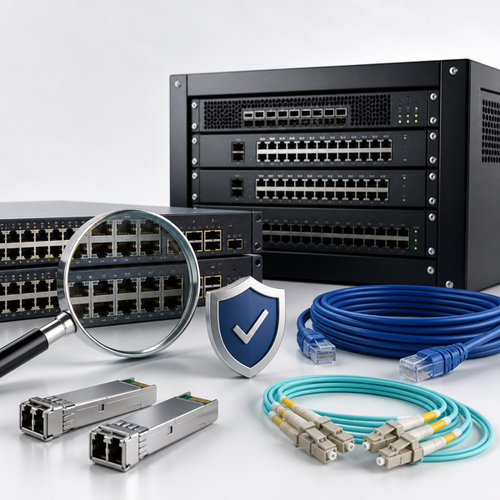
In today’s highly connected digital world, the backbone of any business’s success lies in robust, secure, and scalable network infrastructure. Interface and interconnection equipment standards—covering generic cabling, cybersecurity for home electronic systems, and remote powering requirements—have become essential for organizations seeking optimal productivity and future-proof growth. Across the IT landscape, four recently revised international standards provide a comprehensive blueprint for ensuring not only technical compatibility, but also operational safety, sustainability, and efficient scaling as your business adopts new technologies.
Overview / Introduction
Effective communication between devices and networks is central to the modern Information Technology environment. As organizations embrace smart offices, remote work, automation, and IoT devices, the complexity of connecting disparate systems increases. International standards for interface and interconnection equipment deliver frameworks for:
- Ensuring high-performance and compatibility between products from different vendors
- Achieving electrical and data safety in commercial and residential environments
- Simplifying network upgrades, expansions, and maintenance
- Enhancing the security posture against modern digital threats
This article explores four key international standards:
- ISO/IEC 11801-1:2017/Amd 1:2025/Cor 1:2025 (Generic Cabling for Customer Premises)
- ISO/IEC 15067-5:2026 (Home Electronic System Safety Framework)
- ISO/IEC TS 29125:2017/Amd 1:2020/Cor 1:2025 (Telecommunications Cabling for Remote Powering – Amendment 1)
- ISO/IEC TS 29125:2017/Amd 2:2024/Cor 1:2025 (Telecommunications Cabling for Remote Powering – Amendment 2)
You’ll discover what each standard addresses, practical requirements, and why their adoption is now critical for organizations seeking heightened productivity, enhanced security, and flexible scaling in a rapidly changing IT landscape.
Detailed Standards Coverage
ISO/IEC 11801-1:2017/Amd 1:2025/Cor 1:2025 – Latest Requirements for Generic Cabling
Information technology — Generic cabling for customer premises — Part 1: General requirements — Amendment 1 — Technical Corrigendum 1
This updated standard builds on the widely recognized ISO/IEC 11801-1, which provides the reference model for generic cabling within business and commercial premises. It underpins structured cabling installations that support diverse technologies (Ethernet, IP telephony, Wi-Fi, IoT, video conferencing) in environments ranging from small offices to large campuses.
Scope and Key Requirements
- Defines the structure, performance, and verification procedures for generic cabling systems
- Includes the latest Amendments and Corrigenda, reflecting new industry best practices and correcting previous ambiguities
- Addresses modularity, scalability, and interoperability ensuring future readiness
- Lays out requirements for:
- Topologies (star, ring, mesh)
- Cable categories and performance classes
- Connector types and performance criteria
- Test methods, documentation, and conformance
Who Should Comply?
- IT infrastructure designers and engineers
- Facilities managers and electrical contractors
- OEMs producing compliant cabling or network interface gear
- Organizations upgrading or expanding premises cabling
Implementation & Notable Features
Adoption streamlines installation and maintenance, ensures compatibility as new technologies (such as 10/25/40G Ethernet and PoE++) are introduced, and enables rapid troubleshooting. The Corrigendum ensures clarity and precision where previous drafts may have left room for misinterpretation.
Key highlights:
- Future-proof cabling system design
- Framework for supporting emerging bandwidth requirements
- Reduced downtime with clear testing/documentation protocols
Access the full standard:View ISO/IEC 11801-1:2017/Amd 1:2025/Cor 1:2025 on iTeh Standards
ISO/IEC 15067-5:2026 – Safety Framework for Home Electronic Systems (HES)
Information technology — Home Electronic System (HES) application model — Part 5: A safety framework and guidelines for control and data communication messages
As modern homes and offices integrate increasing numbers of connected devices—from smart thermostats and lighting to home security and appliances—the challenges of network safety and message integrity grow. ISO/IEC 15067-5:2026 addresses these challenges by establishing foundational safety requirements for products linked to communication networks within premises.
Scope and Key Provisions
- Focused on the safety of people and buildings using any device, sensor, or appliance connected to a building or home network (networked appliances)
- Sets out requirements for:
- Safe operation and control via local and remote (wide area network) connections
- Message screening to mitigate risks associated with hazardous remote control messages
- Recommendations for message selection to minimize risk
- Offers guidelines for both normal use and fault conditions throughout the product lifecycle
- Builds on prior standards (IEC Guide 110, ISO/IEC 14762, IEC 63044-4) and extends their safety recommendations for the remote, digital operation of appliances
Who Should Comply?
- Manufacturers of smart home and building devices
- Software and systems integrators in home automation
- Security firms, facility managers, IoT solution architects
- Organizations involved in remote monitoring/control (energy, climate, access, etc.)
Practical Implications
By implementing this framework, organizations can minimize accidental or unsafe activations of networked products—such as unauthorized heating activation, dangerous device settings, or unintended remote actions. The standard reinforces the importance of message validation, monitoring, and hardware/software design for resilience.
Key highlights:
- Enhanced safety in remote appliance/control scenarios
- Systematic screening of potentially unsafe data messages
- Guidelines for device interoperability, message handling, and cybersecurity
Access the full standard:View ISO/IEC 15067-5:2026 on iTeh Standards
ISO/IEC TS 29125:2017/Amd 1:2020/Cor 1:2025 – Cabling for Remote Powering, Amendment 1
Information technology — Telecommunications cabling requirements for remote powering of terminal equipment — Amendment 1 — Technical Corrigendum 1
This technical specification (TS) addresses a critical trend: the rapid expansion of remote powering over data cabling, such as Power over Ethernet (PoE). With new devices requiring both data and power via a single connection, proper cabling design is vital to avoid issues like overheating, data errors, and safety hazards.
Scope and Updated Requirements
- Clarifies and updates requirements for cable bundle sizes, current carrying capacity, and resulting temperature rise
- Replaces prior guidance to reflect higher safe current limits (e.g., raising a key parameter from 1000 mA to 2000 mA)
- Includes new tables for temperature rise versus cable bundle size and conductor diameter
- Emphasizes the importance of air/conduit installations for safe operation at elevated currents
Who Should Comply?
- Network engineers and cabling installers designing PoE or remote-powered networks
- Data center and enterprise IT teams deploying large-scale intelligent building automations
- OEMs and cable manufacturers producing compliant products
Practical Implications
Installing systems according to this standard reduces risks of cable overheating, ensures equipment reliability, and aligns with new high-power applications (security cameras, wireless access points, smart lighting, sensors). It also helps businesses avoid liability and maintenance costs due to improper cable use.
Key highlights:
- Safe support for higher current (2A per conductor) in cable bundles
- Comprehensive tables and methodologies for temperature rise analysis
- Addresses installation environment variables (air vs. conduit)
Access the full standard:View ISO/IEC TS 29125:2017/Amd 1:2020/Cor 1:2025 on iTeh Standards
ISO/IEC TS 29125:2017/Amd 2:2024/Cor 1:2025 – Cabling for Remote Powering, Amendment 2
Information technology — Telecommunications cabling requirements for remote powering of terminal equipment — Amendment 2 — Technical Corrigendum 1
This amendment further refines best practices for deploying telecommunications cabling to safely support remote powering. With new smart building applications and IoT proliferation, more diverse and powerful devices depend on structured cabling infrastructure for both network and power delivery.
Scope and Key Updates
- Introduces new data and visualizations (tables and figures) reflecting updated research on temperature rise due to increased current flow in bundled cables
- Example: Table 9, Figure 4, Table 10, Figure 6, etc. provide detailed, scenario-specific guidance
- Recommends maximum current limits by cable diameter, bundle size, and installation type (air vs. conduit)
- Identifies conditions where temperature rises above 10K are not advisable, especially in hot environments
- Stresses need for manufacturer consultation and precise cable selection for safe installations
Who Should Comply?
- Large enterprises, data centers, and campus network designers
- IT managers implementing large-scale PoE or remote-powered deployments
- Electrical engineers and installers responsible for compliance and fire safety
Practical Implications
Real-world benefits include preventing cable overheating, maintaining long-term cable reliability, and ensuring support for next-generation powered devices—from Wi-Fi 6/7 access points to advanced security and building management systems.
Key highlights:
- Advanced guidance for high-density PoE deployments
- Visual aids for quick reference during design and installation
- Focused safety recommendations for elevated temperature settings
Access the full standard:View ISO/IEC TS 29125:2017/Amd 2:2024/Cor 1:2025 on iTeh Standards
Industry Impact & Compliance
The Business Value of Implementing Interface and Interconnection Standards
In a world driven by digital transformation, organizations cannot afford inconsistent cabling, unsafe device control, or vulnerability to network failures. Adopting internationally recognized interface and interconnection standards delivers substantial benefits:
- Productivity: Reliable networking and remote powering reduce downtime, speed up device rollouts, and simplify maintenance. IT teams can focus on innovation rather than troubleshooting.
- Security: Rigorous requirements for message validation, cable selection, and installation protocols mitigate risks—from unsafe device operation in smart environments to heat/fire hazards in cabling.
- Scalability: Structured, standards-based networks are modular and adaptable, letting businesses expand infrastructure to meet new demands (e.g., more workstations, new IoT devices) without rework.
- Interoperability: Standards guarantee compatibility among multi-vendor equipment, facilitating flexible sourcing, easy integration, and future technology adoption.
- Regulatory and Client Assurance: Compliance with ISO/IEC standards is often required in competitive bids and for insurance or facilities licensing.
Risks of Non-Compliance:
- Unreliable network performance, downtime, and increased maintenance costs
- Safety incidents, including overheating or fires from improper powering
- Exposure to cyber threats in poorly protected smart environments
- Reduced competitiveness and potential legal or insurance complications
Implementation Guidance
To maximize the benefits of these standards, organizations should adopt a structured approach:
1. Assessment & Planning
- Evaluate current cabling and device infrastructure against the latest standard requirements
- Identify gaps, especially where increased remote powering or new IoT/smart building functions are introduced
2. Training & Awareness
- Ensure IT, facilities, and installation teams are trained in the relevant parts of ISO/IEC 11801-1, ISO/IEC 15067-5, and ISO/IEC TS 29125
- Promote a culture of safety and standards adherence across departments
3. Vendor & Product Selection
- Specify only standards-compliant cabling, connectors, and devices in procurement
- Request third-party certifications or manufacturer statements of compliance
4. Design & Implementation
- Use the tables and figures in TS 29125 amendments to guide cable bundling and powering limits
- Apply best practices for message validation and product-level safety outlined in ISO/IEC 15067-5 (especially for remote-control and IoT deployments)
- Document all cabling and network layouts as required by ISO/IEC 11801-1
5. Testing & Verification
- Perform acceptance testing using recommended methods before network sign-off
- Periodically audit and test to ensure ongoing compliance following changes or expansions
6. Continuous Improvement
- Stay up to date on new amendments, corrigenda, and best practices via platforms like iTeh Standards
- Foster relationships with manufacturers and accredited installation providers familiar with these requirements
Conclusion / Next Steps
As digital workplaces, smart homes, and intelligent buildings become the new norm, interface and interconnection equipment standards are not just technical formalities—they are strategic enablers for business continuity, innovation, and security. By adopting the latest ISO/IEC frameworks for cabling, safety, and remote powering, organizations position themselves to thrive in a competitive, ever-evolving IT landscape.
Key takeaways:
- Modern structured cabling and safety standards set the foundation for future-ready networking
- Remote powering and smart device integration require stricter compliance than ever before
- Hardwiring standards compliance into your IT operations maximizes productivity, reduces risks, and accelerates digital transformation
Next Steps for Organizations:
- Review your existing network and device landscape in light of these standards
- Implement training, procurement, and installation processes that prioritize compliance
- Explore the full standards and stay informed about future updates via iTeh Standards
Upgrade your infrastructure today to unlock higher productivity, security, and growth for tomorrow.
Categories
- Latest News
- New Arrivals
- Generalities
- Services and Management
- Natural Sciences
- Health Care
- Environment
- Metrology and Measurement
- Testing
- Mechanical Systems
- Fluid Systems
- Manufacturing
- Energy and Heat
- Electrical Engineering
- Electronics
- Telecommunications
- Information Technology
- Image Technology
- Precision Mechanics
- Road Vehicles
- Railway Engineering
- Shipbuilding
- Aircraft and Space
- Materials Handling
- Packaging
- Textile and Leather
- Clothing
- Agriculture
- Food technology
- Chemical Technology
- Mining and Minerals
- Petroleum
- Metallurgy
- Wood technology
- Glass and Ceramics
- Rubber and Plastics
- Paper Technology
- Paint Industries
- Construction
- Civil Engineering
- Military Engineering
- Entertainment