


Cloud Computing Standards: Essential Frameworks for Secure, Scalable, and Productive Digital Transformation
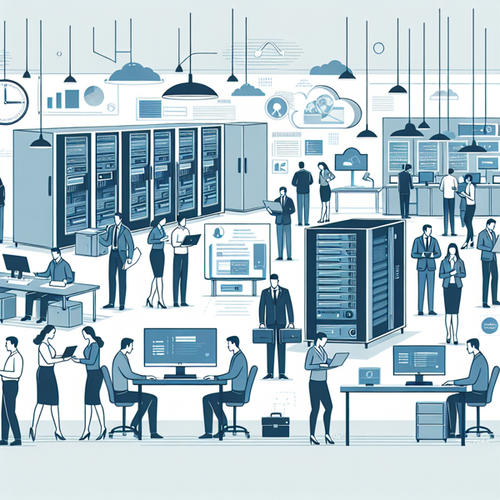
Cloud Computing Standards: Essential Frameworks for Secure, Scalable, and Productive Digital Transformation
Cloud computing today forms the backbone of global business infrastructure, powering everything from traditional IT workloads to cutting-edge artificial intelligence (AI) applications. As organizations rapidly adopt cloud-first strategies, the importance of implementing internationally recognized cloud computing standards cannot be overstated. In this article, we will explore five foundational standards that define best practices, improve productivity, enhance security, and ensure the successful scaling of cloud solutions worldwide. Whether your business is deploying AI-powered workloads, managing multi-cloud environments, or operating at the edge, these standards establish the guardrails for secure and efficient digital transformation.
Overview / Introduction
The evolution of cloud computing has dramatically changed how businesses access, manage, and leverage IT resources. It empowers organizations to deliver critical services on demand, scale flexibly, and innovate at a record pace. However, as the adoption of cloud technologies increases, so does the complexity of managing data security, cross-border compliance, system integration, and service quality.
International standards for cloud computing provide a common language, robust frameworks, and practical guidelines for service providers and customers alike. Standardization ensures that:
- Security policies and data governance practices are well defined
- Service levels are clear and measurable
- Technologies are interoperable and scalable
- New innovations, such as AI and IoT, can be successfully integrated
In this comprehensive guide, you’ll learn about five pivotal cloud standards that are reshaping the industry:
- Taxonomy-based data handling for secure data governance
- Multi-cloud management frameworks for agile operations
- Edge computing landscapes for next-gen hybrid deployments
- SLA metric best practices for transparent service management
- Common cloud technologies and architectures for resilient, efficient solutions
By understanding and implementing these standards, organizations can maximize productivity, streamline compliance, minimize risk, and unlock the full potential of cloud-enabled AI and digital innovation.
Detailed Standards Coverage
ISO/IEC 22624:2020 - Taxonomy-Based Data Handling for Cloud Services
Information technology — Cloud computing — Taxonomy based data handling for cloud services
Managing data securely and efficiently in cloud environments is a business-critical challenge, especially with the proliferation of AI, ever-stricter regulations, and the growing need for seamless data portability. ISO/IEC 22624:2020 addresses these needs by establishing a structured framework for expressing data-related policies and practices based on a comprehensive data taxonomy.
What Does This Standard Cover?
ISO/IEC 22624:2020:
- Defines a framework for the structured expression of data policies and practices in cloud computing, rooted in the data taxonomy from ISO/IEC 19944
- Provides practical guidelines for data handling, subcategories, and classifications
- Covers policies relating to data geolocation, cross-border flow, access, portability, usage, management, and governance
- Offers use cases for data handling challenges, including data control, access, and location
Who Should Comply?
- Cloud service providers (CSPs)
- Cloud service customers (CSCs) and users
- Organizations and stakeholders focused on legal, policy, or technical implications of cloud-based data management
Practical Implications
Implementing ISO/IEC 22624 helps organizations:
- Map regulatory requirements (such as GDPR) to specific data categories
- Draft and evaluate codes of conduct across complex, distributed environments
- Facilitate data portability and secure cross-border data flows—critical for multinational enterprises
- Establish clear roles, responsibilities, and expectations for data use, access, and governance
Key highlights:
- Structured taxonomy enables clear categorization and consistent data handling across platforms
- Framework supports both at-rest and in-transit data scenarios, including remote access
- Strong alignment with data quality, data security, and data sovereignty requirements
Access the full standard:View ISO/IEC 22624:2020 on iTeh Standards
ISO/IEC TR 10822-1:2025 - Multi-Cloud Management: Overview & Use Cases
Cloud computing — Multi-cloud management — Part 1: Overview and use cases
As organizations embrace multi-cloud strategies—using multiple cloud service providers (CSPs) for agility, resilience, and cost-effectiveness—complexity grows. Different vendors mean different interfaces, security policies, billing models, and management tools. ISO/IEC TR 10822-1:2025 provides comprehensive guidance for managing such multi-cloud environments.
Scope and Coverage
This standard:
- Surveys the overarching challenges in managing services across multiple CSPs
- Details management activities and functions including service discovery, resource scheduling, deployment, security, policy governance, and reporting
- Presents practical use cases with user and functional perspectives
- Guides the implementation of key management functions such as access control, orchestration, SLA (service level agreement) management, and interoperability
Applicability
- Enterprises and IT teams operating with two or more cloud service providers
- Managed service providers (MSPs) and third-party integrators
- Solution architects building resilient, vendor-neutral cloud infrastructures
Practical Benefits
By adopting the best practices laid out in ISO/IEC TR 10822-1, organizations can:
- Orchestrate workloads across clouds with unified administration
- Integrate billing, metering, and reporting for improved financial governance
- Enhance security and policy enforcement in diverse environments
- Streamline API management, avoiding vendor lock-in
- Boost uptime, business continuity, and disaster recovery operations
Key highlights:
- Detailed functional architectures for real-world multi-cloud management
- Best practice use cases for identity, access, and service orchestration
- Framework for integrating and aggregating APIs across cloud services
Access the full standard:View ISO/IEC TR 10822-1:2025 on iTeh Standards
ISO/IEC TR 23188:2020 - The Edge Computing Landscape
Information technology — Cloud computing — Edge computing landscape
Edge computing is rapidly transforming digital architectures by bringing compute and data resources physically closer to users, sensors, and devices—enabling low-latency, high-speed applications essential for AI, IoT, and smart industry. ISO/IEC TR 23188:2020 systematically maps the landscape of edge computing and its integration with cloud systems.
What’s Inside
ISO/IEC TR 23188 covers:
- Fundamental concepts and architectural models for edge computing
- Relationship to cloud computing and IoT (Internet of Things)
- Software and hardware technologies—VMs, containers, serverless, and microservices
- Data management, networking, virtualization, and software classification
- Real-time operation, mobile edge computing, and comprehensive security/privacy considerations
- Deployment models and governance frameworks for hybrid architectures
Who Should Use This Standard
- IT leaders, architects, and solution designers working in distributed, low-latency environments
- Organizations deploying AI, machine learning, or IoT at the edge
- Cloud and telco providers building integrated edge platforms
Impact on Implementation
Following ISO/IEC TR 23188 positions organizations to:
- Architect hybrid and distributed cloud-edge environments
- Select and deploy appropriate technologies for edge workloads
- Address unique risks and privacy challenges inherent in edge deployments
- Align with best-in-class data flow, storage, and processing practices
- Ensure robust security and regulatory compliance in dynamic, diverse environments
Key highlights:
- Comprehensive architectural guidance for hybrid cloud-edge systems
- Clear taxonomy of enabling technologies (containers, microservices, serverless)
- Practical insights on real-time, mobile, and high-availability edge strategies
Access the full standard:View ISO/IEC TR 23188:2020 on iTeh Standards
ISO/IEC TR 23951:2025 - Best Practices for Using the Cloud SLA Metric Model
Information technology — Cloud computing — Best practices for using the cloud service level agreement (SLA) metric model
A clear, measurable, and enforceable Cloud Service Level Agreement (SLA) is the cornerstone of dependable cloud computing. ISO/IEC TR 23951:2025 delivers best practices and detailed examples for using the ISO/IEC 19086-2 metric model—standardizing how performance, reliability, and commitments are defined and monitored.
Key Coverage Areas
- How to extract, clarify, and compose metric definitions from existing SLAs
- Templates and tabular representation for SLA metrics (response times, availability, etc.)
- Guidance on comparing, cataloging, and extending metric definitions across contracts
- Real-world scenarios for CSCs (cloud service customers), CSPs, CSNs, and regulators
Relevant Audiences
- Cloud customers negotiating or reviewing SLAs
- Service providers enhancing transparency and accountability
- Compliance and procurement teams overseeing vendor relationships
Practical Implications
By applying this standard, you ensure:
- Precise and transparent measurement of cloud service performance
- Alignment with regulatory and business continuity requirements
- Ability to track improvements, compare providers, and enforce contractual obligations
- Lowered risk of disputes and improved vendor relationships
Key highlights:
- Clear templates and guidelines to create reliable SLA metrics
- Supports regulatory, procurement, and vendor management processes
- Enhances customer trust through standardized, objective performance evaluation
Access the full standard:View ISO/IEC TR 23951:2025 on iTeh Standards
ISO/IEC TS 23167:2020 - Common Technologies and Techniques in Cloud Computing
Information technology — Cloud computing — Common technologies and techniques
Delivering scalable, secure, and flexible cloud services relies on a suite of proven cloud-native technologies. ISO/IEC TS 23167:2020 documents these foundational building blocks and techniques, offering a concise, organized reference for both development and operations teams.
Standard Scope
- In-depth descriptions of virtual machines (VMs), hypervisors, and container technologies
- Exploration of serverless computing, microservices architecture, and automation techniques
- Coverage of platform-as-a-service (PaaS) architectures and storage-as-a-service models
- Best practices for cloud networking, scalability, elasticity, and automation
- Security, access control, and encryption methods tailored for cloud ecosystems
Intended Users
- Cloud architects and DevOps practitioners
- Application developers engineering scalable, resilient systems
- Security officers, network engineers, and IT operations staff
Organizational Benefits
Adopting the recommendations in ISO/IEC TS 23167 supports:
- Efficient resource management and reduced operational costs
- Swift adaptation to changing workload demands through elasticity and automation
- Robust security through integrated encryption, identity, and role-based access
- Seamless scalability and resilience for business-critical applications
Key highlights:
- Coverage of all major cloud-native enabling technologies in one reference
- Practical security, scaling, and automation strategies
- Aligns technology decisions with international best practices for reliability and growth
Access the full standard:View ISO/IEC TS 23167:2020 on iTeh Standards
Industry Impact & Compliance
Cloud computing standards are no longer optional—they’re essential for trust, competitive advantage, and sustainable scaling in modern IT environments. Compliance with these standards impact businesses in several transformative ways:
- Regulatory Alignment: Implementing formalized frameworks (like data handling and SLA models) helps organizations align with GDPR, CCPA, and other evolving global privacy and data sovereignty laws.
- Risk Management: Standardized processes lower risks related to data breaches, non-compliance penalties, and contractual disputes with providers.
- Security Assurance: Adopting guidelines for multi-cloud management, architecture, and common technologies ensures robust security postures even as businesses adopt AI and extend to the edge.
- Productivity & Innovation: By clarifying performance metrics and defining clear operational models, these standards free teams to focus on value creation and digital innovation.
- Scalability: Cloud-native architectures, reinforced by international standards, are integral to seamless geographic and workload scaling, crucial for global growth and AI enablement.
Risks of non-compliance:
- Legal penalties and reputational damage
- Vendor lock-in and increased integration difficulties
- Data loss, leakage, or privacy breaches
- Lower service reliability and customer dissatisfaction
Implementation Guidance
Transitioning to internationally recognized cloud standards can seem daunting, but structured approaches and best practices can smooth the path:
Common Implementation Steps:
- Gap Analysis: Review current policies, architectures, and SLAs against standard requirements
- Stakeholder Training: Ensure key staff understand the standards and their practical implications
- Policy Adoption: Update internal policies for data management, multi-cloud operations, and performance monitoring as outlined in ISO/IEC 22624, 10822-1, 23188, 23951, and 23167
- Technical Integration: Deploy technologies and tools (container platforms, automation, monitoring, security controls) to match the guidelines
- Continuous Auditing: Monitor compliance with ongoing internal/external audits
Best Practices:
- Involve compliance, security, architecture, and operational leadership in planning and reviews
- Use cross-industry resources (including those from iTeh Standards) for training and technology selection
- Leverage vendors who certify conformance to relevant ISO/IEC standards
- Maintain up-to-date documentation and adopt automated compliance monitoring where possible
Resources for Organizations:
- Access to full standards at iTeh Standards
- ISO and national standards body training modules
- Vendor documentation and open-source frameworks
- Specialist consultancy on cloud transformation and compliance
Conclusion / Next Steps
International cloud computing standards set the benchmark for security, productivity, and scalability in today’s digital economy. Whether you’re migrating legacy workloads, launching global AI initiatives, or optimizing edge deployments, these five standards—ISO/IEC 22624, ISO/IEC TR 10822-1, ISO/IEC TR 23188, ISO/IEC TR 23951, and ISO/IEC TS 23167—provide a holistic foundation for sustained success.
Key Takeaways:
- Standards are critical for secure, compliant, and efficient cloud usage
- Proper adoption boosts productivity, reduces risk, and unlocks advanced capabilities such as AI
- Staying up-to-date with evolving best practices ensures long-term agility and business continuity
Recommendations:
- Assess your cloud strategies against these international standards
- Invest in education and continuous improvement
- Use iTeh Standards as your authoritative source for up-to-date information, full standard texts, and implementation guidance
Be proactive, not reactive—deploy best-practice standards today and build a secure, scalable, and future-ready digital enterprise.
Categories
- Latest News
- New Arrivals
- Generalities
- Services and Management
- Natural Sciences
- Health Care
- Environment
- Metrology and Measurement
- Testing
- Mechanical Systems
- Fluid Systems
- Manufacturing
- Energy and Heat
- Electrical Engineering
- Electronics
- Telecommunications
- Information Technology
- Image Technology
- Precision Mechanics
- Road Vehicles
- Railway Engineering
- Shipbuilding
- Aircraft and Space
- Materials Handling
- Packaging
- Textile and Leather
- Clothing
- Agriculture
- Food technology
- Chemical Technology
- Mining and Minerals
- Petroleum
- Metallurgy
- Wood technology
- Glass and Ceramics
- Rubber and Plastics
- Paper Technology
- Paint Industries
- Construction
- Civil Engineering
- Military Engineering
- Entertainment