


Plastics Pipes Standards: A Clear Guide to Modern Rehabilitation and Compliance
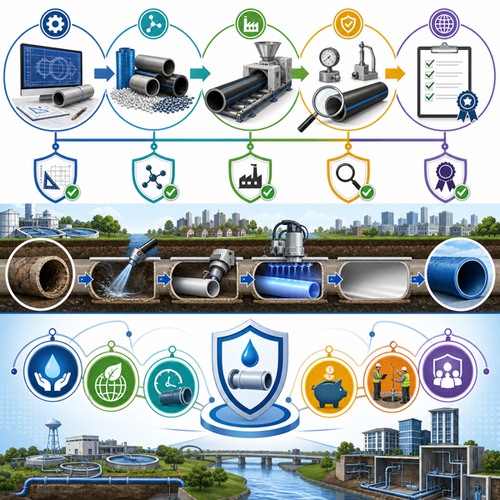
In the rapidly advancing field of fluid systems, implementing internationally recognized standards for plastics pipes is no longer a formality—it's a necessity for modern business resilience, infrastructure longevity, and competitive advantage. As cities grow and technologies evolve, robust standards for rehabilitation of underground pipe networks ensure that water supply and sewerage systems remain reliable, cost-effective, and scalable. Four pivotal standards—ISO 11300-1:2026, ISO 11300-3:2026, ISO/TS 23818-1:2026, and ISO/TS 23818-3:2026—define the requirements for new materials and advanced installation methods, while ensuring conformity, safety, and continual improvement. Mastering these standards means unlockable productivity gains, enhanced security, and easier scaling as your organization integrates new technologies and faces increasing regulatory expectations.
Overview / Introduction
The integrity of public and private water delivery, drainage, and sewerage systems is a cornerstone of modern society. As aging infrastructures demand renewal, the use of plastics pipes in rehabilitation projects—instead of full replacement—has become the industry benchmark. Reliable piping standards not only ensure water quality and network durability but also optimize installation processes, minimize environmental impact, and foster innovation in fluid systems.
This article explains:
- The essentials of plastics pipes standards for rehabilitation of drains, sewers, and water networks
- Key differences between Polyethylene (PE) and Unplasticized Polyvinyl Chloride (PVC-U) systems
- How conformity assessment streamlines quality management, supports certification, and elevates long-term performance
- Practical guidance for implementation, compliance, and best practices
Whether you are a utility operator, water engineer, manufacturer, or project manager, understanding and applying these standards will help you address today’s fluid system challenges with proven solutions.
Detailed Standards Coverage
ISO 11300-1:2026 - Rehabilitation of Pipelines with Polyethylene (PE)
Piping systems for rehabilitation of underground drains, sewers and water supply networks — Part 1: Polyethylene (PE) material
ISO 11300-1:2026 specifies requirements and test methods for polyethylene (PE) pipes and fittings used in the rehabilitation—via renovation and trenchless replacement—of underground drains, sewers, and water supply networks. The standard applies to both non-pressure and pressure applications, covering water intended for human consumption including raw water pipelines. It addresses new advances in renovation techniques such as lining with continuous pipes, close-fit pipes, pipe bursting, pipe extraction, horizontal directional drilling (HDD), and impact moling. These techniques help minimize surface disruption and reduce project times, which is increasingly critical when cities grow and infrastructure ages.
The document meticulously defines requirements for PE pipes and fittings both as-manufactured and as-installed, encompassing:
- Acceptance criteria for virgin, reprocessable, and recyclable materials
- Pipe and fitting specifications, including geometric and mechanical characteristics, color, and appearance
- Jointing procedures (butt fusion, electrofusion, mechanical connections)
- Marking, storage, handling, installation, inspection, and documentation responsibilities
- Additional requirements for specialized PE pipes such as co-extruded or peelable-layer coated variants
ISO 11300-1:2026 also references fitness-for-purpose criteria and detailed regional adaptation, ensuring global harmonization while allowing for local conditions. Its comprehensive coverage ensures long-term network resilience, safety, and ease of future scaling as new technologies emerge.
Key highlights:
- Applies to renovation and trenchless replacement for both pressure and non-pressure applications
- Defines material, installation, and inspection requirements for PE pipes and fittings
- Supports a broad array of advanced, low-impact rehabilitation techniques
Access the full standard:View ISO 11300-1:2026 on iTeh Standards
ISO 11300-3:2026 - Rehabilitation of Pipelines with Unplasticized Polyvinyl Chloride (PVC-U)
Piping systems for rehabilitation of underground drains, sewers and water supply networks — Part 3: Unplasticized poly (vinyl chloride) (PVC-U) material
ISO 11300-3:2026 focuses specifically on unplasticized poly (vinyl chloride) (PVC-U) pipes and fittings for the rehabilitation of non-pressure underground drains and sewers. Unlike its counterpart for PE, this standard is not suitable for pressurized applications or potable water under pressure but offers clear guidance on lining with close-fit pipes—a favored technique for rapid, minimally disruptive renewal of gravity-based pipelines.
The document stipulates:
- Material and mechanical property requirements for PVC-U pipes as-manufactured and as-installed
- Jointing procedures, marking, and installation practice
- Handling, storage, and preparatory work for site crews
- Inspection and testing provisions both at the manufacturing and installation phases
Annexes further outline requirements for installation manuals and fitness-for-purpose evaluations. In adopting this standard, organizations ensure their rehabilitation operations adhere to globally recognized safety and performance benchmarks, while benefiting from PVC-U’s proven longevity and chemical resistance.
Key highlights:
- Targets non-pressure drain and sewer rehabilitation using close-fit pipe techniques
- Clarifies requirements for PVC-U materials, installation, and quality control
- Promotes uniform, high-quality project outcomes/harmonized across regions
Access the full standard:View ISO 11300-3:2026 on iTeh Standards
ISO/TS 23818-1:2026 - Assessment of Conformity of PE Piping Systems
Assessment of conformity of plastics piping systems for the rehabilitation of existing pipelines — Part 1: Polyethylene (PE) material
This technical specification offers a structured conformity assessment scheme for PE products used in pipeline rehabilitation, providing the backbone for effective quality management and product certification. It is intended to be included within a manufacturer’s quality plan, ensuring robust control from design through to market delivery and installation.
The specification details:
- Assessment stages and types of testing (type testing, batch release, process verification, audit and witness tests)
- Sampling plans, inspection frequencies, and record-keeping responsibilities
- Direct alignments with ISO 11300-1 (for drains, sewers, and water networks) and ISO 11301-1 (for gas supply)
Practical implementation means every batch of PE pipes and fittings is tested and verified, critical for regulatory approval and public trust. The structure also supports third-party certification, enabling organizations to demonstrate full compliance with both technical and safety requirements.
Key highlights:
- Comprehensive conformity assessment for PE piping products and assemblies
- Supports type testing, batch release, process control, and certification
- Direct alignment with installation and post-installation assessment standards
Access the full standard:View ISO/TS 23818-1:2026 on iTeh Standards
ISO/TS 23818-3:2026 - Assessment of Conformity of PVC-U Piping Systems
Assessment of conformity of plastics piping systems for the rehabilitation of existing pipelines — Part 3: Unplasticised poly(vinyl chloride) (PVC-U) material
Tailored to PVC-U materials, this technical specification sets out the conformity assessment framework for products and assemblies used in pipeline rehabilitation as defined by ISO 11300-3. When applied within a manufacturer's quality management system, it ensures all PVC-U components—pipes, fittings, joints—meet stringent international standards from production to installation.
Key aspects include:
- Procedures for type testing, batch release, and process verification specific to PVC-U
- Quality planning, inspection, and reporting protocols
- Integration into wider certification programs, enabling third-party validation
With harmonized testing and audit mechanisms, this standard delivers traceable assurance to asset owners, operators, and end-users.
Key highlights:
- Structured conformity assessment for all PVC-U piping products
- Seamless interface with ISO 11300-3 for unified pipeline rehabilitation projects
- Supports transparent, globally recognized certification and inspection processes
Access the full standard:View ISO/TS 23818-3:2026 on iTeh Standards
Industry Impact & Compliance
Why Standards Matter for Plastics Pipes
Adopting these international standards transforms how businesses plan, source, install, and maintain underground fluid systems. Key impacts and considerations include:
- Risk Reduction: Following globally harmonized specifications minimizes the chance of installation failures—preventing leaks, bursts, or contamination, and reducing liability.
- Enhanced Security and Safety: Designed for materials in contact with drinking water or handling wastewater, these standards help guarantee public health and compliance with regulatory frameworks.
- Elevated Productivity: Standardized installation methods, quality guidance, and performance benchmarks reduce rework, speed up project timelines, and allow seamless adoption of new, efficient technologies like trenchless rehabilitation.
- Cost Optimizations: By specifying quality and installation parameters for plastics pipes, organizations avoid premature failure and simplify maintenance strategies, resulting in lower total lifecycle costs.
- Scalability: Consistent standards empower companies to expand operations across borders—each network upgrade or new build follows the same proven blueprint.
- Certification As Competitive Advantage: Conformity assessment and third-party certification build trust among clients, public authority regulators, and insurance providers, unlocking new markets.
- Sustainability: Efficient rehabilitation extends asset life, reduces environmental impact, and minimizes waste, supporting organizational and societal sustainability goals.
Non-compliance, on the other hand, exposes organizations to higher failure rates, reputational risk, and potential legal action—particularly as regulatory scrutiny intensifies worldwide.
Implementation Guidance
Common Approaches
Implementing plastics pipes standards demands a systematic, phased approach:
- Initial Audit: Assess your current piping systems, operations, and designs against ISO 11300-1/3 requirements or equivalents.
- Material Sourcing: Ensure all purchased pipes, fittings, and ancillaries are certified to the relevant standards.
- Staff Training: Educate installation, inspection, and maintenance teams on techniques like close-fit pipe lining and trenchless replacements, referencing standard installation practices.
- Quality Management: Integrate conformity assessment schemes (per ISO/TS 23818-1/3) into your existing quality system—ISO 9001 alignment is highly beneficial.
- Documentation: Maintain clear records for every project phase, facilitating traceability, auditability, and future maintenance.
- Third-Party Certification: Where possible, leverage accredited certification bodies for additional assurance and competitive differentiation.
- Continuous Improvement: Use standard-driven feedback loops to refine processes and adopt new methods as technology evolves.
Best Practices
- Design with Standards in Mind: Factor in all standard requirements (including installation tolerances, material specs, and jointing techniques) at the earliest project stages.
- Leverage Accredited Suppliers: Work exclusively with manufacturers who declare and prove conformity to the relevant ISO standards.
- Routine Inspections and Testing: Implement batch and process verification testing not only during installation, but also as part of ongoing maintenance programs.
- Stay Updated: Continuously monitor standard updates via authoritative platforms like iTeh Standards.
- Stakeholder Communication: Use compliance with international standards as a transparent, communicable value proposition for partners, clients, and regulators.
Resources for Organizations
- Access to the full text of each standard at iTeh Standards
- ISO/TC 138 and CEN/TC 155 technical committees for ongoing guidance
- ISO 9001 training for quality management alignment
- National and regional infrastructure authorities for additional compliance requirements
Conclusion / Next Steps
As fluid systems worldwide evolve in complexity and scale, organizations must future-proof their underground pipeline networks using the latest plastics pipes standards. The four ISO documents—covering polyethylene (PE) and PVC-U materials, as well as their conformity assessments—offer a comprehensive framework for safely and efficiently rehabilitating water supply, drain, and sewer infrastructures.
Key takeaways:
- Clear, robust standards support higher quality installations, operational security, and strong scaling potential
- Detailed conformity frameworks help you achieve certification, enhance brand reputation, and ensure compliance
- Adaptation and compliance with these best-in-class standards position your projects for longevity, reduced risk, and sustainable cost savings
Next steps:
- Review your current practices against the ISO 11300 and ISO/TS 23818 standards
- Train teams, upgrade your quality systems, and source only certified products
- Secure full access to standards and implementation resources at iTeh Standards
Make resilience, scalability, and world-class safety the foundation of your infrastructure—by building on the right standards today.
Categories
- Latest News
- New Arrivals
- Generalities
- Services and Management
- Natural Sciences
- Health Care
- Environment
- Metrology and Measurement
- Testing
- Mechanical Systems
- Fluid Systems
- Manufacturing
- Energy and Heat
- Electrical Engineering
- Electronics
- Telecommunications
- Information Technology
- Image Technology
- Precision Mechanics
- Road Vehicles
- Railway Engineering
- Shipbuilding
- Aircraft and Space
- Materials Handling
- Packaging
- Textile and Leather
- Clothing
- Agriculture
- Food technology
- Chemical Technology
- Mining and Minerals
- Petroleum
- Metallurgy
- Wood technology
- Glass and Ceramics
- Rubber and Plastics
- Paper Technology
- Paint Industries
- Construction
- Civil Engineering
- Military Engineering
- Entertainment