


May 2025 Monthly Overview: Key Standards in Environment, Health Protection, and Safety
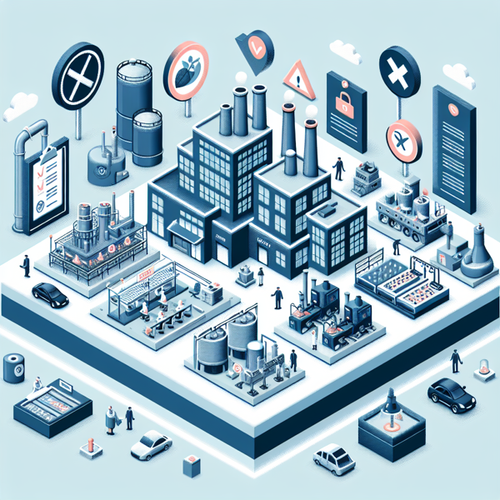
Looking back at May 2025, the Environment, Health Protection, and Safety sector saw the publication of five significant standards—each addressing diverse but interlinked challenges across household product safety, energy infrastructure, construction site protection, water quality, and climate adaptation finance. This monthly overview distills the essential details of these publications, helping professionals understand emerging requirements, plan for compliance, and recognize broader industry trends. For safety managers, compliance officers, engineers, and researchers, this roundup offers clarity and actionable insights, ensuring no critical standard slips through the cracks during a month that reflected both regulatory continuity and forward-thinking adaptation.
Monthly Overview: May 2025
May 2025 represented a robust period for standardization in the Environment, Health Protection, and Safety sector. The five standards released touched upon public health, technical safety, infrastructure reliability, and sustainability—showcasing both the industry’s ongoing focus on immediate risk mitigation and its long-term evolution toward climate resilience and sustainable development.
Trends evident this month included:
- Enhanced technical specificity: From detailed testing methodologies for energy storage systems to new approaches for evaluating migration of substances from construction materials, precision and scientific rigor remain priorities.
- Occupational and public safety: Publications on household appliances and temporary edge protection reinforced dedication to accident prevention in both domestic and worksite contexts.
- Drinking water protection and climate adaptation: Standards targeting water quality and local climate financing mechanisms highlighted the increasing integration of environmental health with broader sustainability and resilience frameworks.
Compared to previous months, May’s standards emphasized both foundational safety (across home, worksite, and utilities) and emerging needs, such as aligning local actions with the Paris Agreement and Sustainable Development Goals. The sector’s direction is clear: advancing technical best practices while supporting societal adaptation to new risks and expectations.
Standards Published This Month
EN IEC 60335-2-59:2025 - Particular Requirements for Insect Killers
Household and Similar Electrical Appliances – Safety – Part 2-59: Particular Requirements for Insect Killers
This standard addresses the safety of electric insect killers intended for household and similar uses, focusing on devices with a rated voltage not exceeding 250 V, including those powered by batteries or direct current (DC) sources. As a part of the broader IEC 60335 series, this update supersedes earlier editions, now aligning its text with the latest harmonized requirements in IEC 60335-1:2020.
Scope and Key Requirements:
- Specifies construction, marking, insulation, endurance, and testing requirements for electric insect killers.
- Covers requirements for protection against electrical shock, mechanical hazards, overheating, battery safety, and radiation risks.
- Introduces temperature rise limits for accessible surfaces under normal operation.
- Applies to both fixed and portable appliances for indoor and similar environments.
Compliance:
- Manufacturers of electrical insect killers, retailers, importers, testing bodies, and certification agencies.
- Stakeholders in consumer product safety and compliance.
Industry Context:
- Aligns household safety norms across the EU and internationally, supporting market access and harmonization.
- Responds to new safety insights and expectations for domestic electrical equipment.
Key highlights:
- Updated to reflect changes in IEC 60335-1:2020.
- Additional safety clarifications for battery operation and temperature rise.
- Closer integration with international best practices for domestic electrical safety.
Access the full standard:View EN IEC 60335-2-59:2025 on iTeh Standards
IEC TS 62933-2-3:2025 - EES Performance Assessment During Site Operation
Electric Energy Storage (EES) Systems – Part 2-3: Unit Parameters and Testing Methods – Performance Assessment Test During Site Operation
This technical specification defines how to verify and assess the performance of electric energy storage systems (EES) following commissioning. It is crucial for grid operators, system integrators, utilities, and industrial users implementing or operating energy storage to ensure ongoing reliability and safety.
Scope and Key Requirements:
- Establishes detailed test methods for parameters such as energy storage capacity, roundtrip efficiency, output/input power, and availability.
- Details operational performance testing for grid-connected applications (e.g., active/reactive power control, frequency regulation, power quality).
- Differentiates testing for typical operating modes: frequency regulation, backup power, renewable integration, and more.
- Outlines requirements for data sampling, assessment intervals, and reporting.
Compliance:
- Utilities, energy storage system manufacturers, third-party testing agencies, commissioning authorities, and asset managers.
- Stakeholders in energy, grid infrastructure, and smart grid modernization.
Industry Context:
- Supports deep integration of EES into modern grids.
- Enables transparent benchmarking, contract verification, and continuous improvement.
Key highlights:
- Unifies test methods across diverse EES technologies.
- Addresses both general and application-specific performance needs.
- Facilitates grid reliability, investment justification, and regulatory compliance.
Access the full standard:View IEC TS 62933-2-3:2025 on iTeh Standards
EN 13374:2025 - Temporary Edge Protection Systems
Temporary Edge Protection Systems – Product Specification – Test Methods
EN 13374:2025 is a critical safety standard for the construction sector, specifying the requirements and test methods for temporary edge protection systems used during building or infrastructure construction and maintenance. The standard covers edge protection on both flat and sloping surfaces, reflecting updated best practices and lessons learned from previous editions.
Scope and Key Requirements:
- Applies to edge protection for preventing falls from height during construction and maintenance.
- Defines three classes (A, B, and C) for different risk and usage scenarios, each with differentiated requirements for load, performance, and design.
- Specifies both static and dynamic testing for arresting falls and absorbing energy.
- Provides clear marking, documentation, and classification to assist compliance and site management.
Compliance:
- Construction contractors, safety engineers, equipment manufacturers and procurement specialists.
Industry Context:
- Directly supports compliance with EU Work at Height Directives and national regulations.
- Responds to evolving worksite safety expectations and the need for harmonized product performance.
Key highlights:
- Revised test procedures and expanded guidance for all three edge protection classes.
- Enhanced clarity in classification and structural design requirements.
- Inclusion of new simplified methods and regional deviations for select countries.
Access the full standard:View EN 13374:2025 on iTeh Standards
EN 14944-4:2025 - Migration of Substances from Cement-Based Materials
Influence of Cement Based Products on Water Intended for Human Consumption – Test Methods – Part 4: Migration of Substances from Site-Applied Cement Based Materials and Associated Non-Cement Based Products/Materials
This standard advances methodologies for evaluating the potential migration of substances from site-applied cement-based products, and related non-cement materials, into test waters. It is especially relevant for entities concerned with the integrity of drinking water infrastructure—from raw materials suppliers to water utilities and regulators.
Scope and Key Requirements:
- Establishes test methods to determine the migration of substances from hardened, site-applied cement-based materials and related constituents into water.
- Covers a variety of materials, including pre-packaged mortars and associated non-cement products.
- Applies to components intended to contact water for human consumption (e.g., linings and tanks).
Compliance:
- Manufacturers, installers, and specifiers of concrete/mortar products for water infrastructure.
- Water utilities, construction project managers, regulatory laboratories.
Industry Context:
- Provides critical assurance of drinking water safety and regulatory conformance.
- Enhances monitoring and approval of construction materials in contact with potable water.
Key highlights:
- Incorporates separate assessment protocols for constituent materials (concretes, mortars, and others).
- Standardizes calculation and reporting requirements for migration levels.
- Strengthens basis for regulatory approval and continuous water quality monitoring.
Access the full standard:View EN 14944-4:2025 on iTeh Standards
EN ISO 14093:2025 - Financing Local Adaptation to Climate Change
Mechanism for Financing Local Adaptation to Climate Change – Performance-Based Climate Resilience Grants – Requirements and Guidelines (ISO 14093:2022)
This international standard establishes a country-based mechanism for channeling climate finance to subnational (local and regional) authorities to support climate change adaptation and resilience building. EN ISO 14093:2025 provides both requirements and robust guidelines for implementing performance-based climate resilience grants (PBCRGs), directly supporting the Paris Agreement and United Nations Sustainable Development Goals.
Scope and Key Requirements:
- Presents a performance-based approach to financing local adaptation, emphasizing monitoring, verification, and accountability of expenditures.
- Targets public sector authorities, donors, financial institutions, and supporting entities.
- Details criteria for eligibility, performance indicators, operational guidelines, and fund flow management.
- Promotes good governance, transparency, and mainstreaming of climate adaptation in local development planning.
Compliance:
- National and subnational governments, donors, climate finance institutions, NGOs, and consulting organizations supporting climate adaptation.
Industry Context:
- Comprehensive operationalization of climate finance from national to local actors.
- Encourages alignment between local investments and global sustainability objectives.
Key highlights:
- Integrates lessons learned from implementation case studies internationally.
- Facilitates scalable adaptation finance and reporting frameworks for varied jurisdictions.
- Establishes linkage between local adaptation investments and high-level climate goals.
Access the full standard:View EN ISO 14093:2025 on iTeh Standards
Common Themes and Industry Trends
1. Risk Prevention and Core Safety
This month’s standards reflect a decisive focus on foundational risk mitigation in both the household and workplace environments. EN IEC 60335-2-59:2025 and EN 13374:2025 address new and existing hazards—from electric shock in home appliances to fall protection at construction sites—demonstrating that routine risk reduction remains an industry mainstay.
2. Technical Progress in Infrastructure Assessment
The precision of IEC TS 62933-2-3:2025 for energy storage underscores the advanced controls and oversight required as energy systems modernize and decarbonize. Rigorously defined test methods point to a sector that is both maturing and increasingly integrated into national energy security.
3. Environmental and Health Protection at the Interface of Materials and Water
EN 14944-4:2025’s attention to migration testing bridges construction materials science with drinking water safety—a core intersection of public health, environmental stewardship, and infrastructure lifecycle management.
4. Forward Momentum on Sustainability and Climate
EN ISO 14093:2025 illustrates the sector’s readiness to operationalize climate commitments through concrete (and measurable) local action. The strong orientation toward Paris Agreement alignment and SDG support sets a template for future cross-sectoral priorities—where resilience and adaptation are integrated into all operational levels.
Compliance and Implementation Considerations
Who Should Act?
- Manufacturers of appliances, construction equipment, and building materials must review product conformity and testing protocols.
- Utilities and infrastructure operators should integrate new testing and verification requirements into commissioning, operational, and maintenance procedures.
- Construction and contracting firms need to evaluate (and possibly upgrade) site safety measures and material selection processes.
- Policy makers, donors, and governmental authorities should familiarize themselves with new adaptation finance mechanisms and climate reporting practices.
Practical Steps:
- Gap Analysis: Identify which standards affect current products, operations, or procurement. Map requirements to existing practices.
- Prioritize Compliance: Address time-sensitive updates first (e.g., edge protection for construction underway or imminent product launches).
- Training and Awareness: Brief relevant teams, update safety protocols, and expand competency in new testing methods or grant mechanisms.
- Documentation and Reporting: Update technical files, test reports, and compliance documentation to align with new standards—especially for regulated sectors (drinking water, building safety, electrical devices).
- Engage with Stakeholders: Consult with suppliers, certification bodies, finance partners, and local governments to coordinate over new compliance expectations.
Timelines:
- Most European and international standards provide for transition periods (often 1–3 years). Early adoption is advisable, especially given the international harmonization trend.
- For high-risk areas (e.g., water infrastructure, workplace safety), immediate actions may be warranted pending regulatory guidance.
Resources:
- Access full texts and guidance documents through iTeh Standards for authoritative references, interpretation, and compliance support.
- Leverage case studies and annexes within the standards (e.g., EN ISO 14093:2025) to inform adaptation of local practices.
Conclusion: Key Takeaways from May 2025
May 2025’s standardization activity in the Environment, Health Protection, and Safety sector underscored the continued convergence of technical safety, public health, infrastructure assurance, and climate resilience. The five standards discussed here offer:
- Improved technical frameworks for the safe design and use of products (e.g., insect killers, edge protection);
- Rigorous, harmonized approaches to performance testing in emerging fields like electric energy storage;
- Strengthened protection of water supplies in the context of evolving materials and construction techniques;
- Proven methods for securing and tracking climate adaptation finance at the local level.
For industry professionals, managers, and compliance officers, reviewing these standards is not just procedural—it is instrumental in maintaining market access, safeguarding public health, and delivering on stakeholder expectations for safety and sustainability. Staying current is a matter of both regulatory compliance and strategic leadership.
Explore the detailed content and implementation guidance for each standard using the provided links, and leverage the expertise of iTeh Standards as your comprehensive resource for standardization and compliance in the Environment, Health Protection, and Safety sector.
Categories
- Latest News
- New Arrivals
- Generalities
- Services and Management
- Natural Sciences
- Health Care
- Environment
- Metrology and Measurement
- Testing
- Mechanical Systems
- Fluid Systems
- Manufacturing
- Energy and Heat
- Electrical Engineering
- Electronics
- Telecommunications
- Information Technology
- Image Technology
- Precision Mechanics
- Road Vehicles
- Railway Engineering
- Shipbuilding
- Aircraft and Space
- Materials Handling
- Packaging
- Textile and Leather
- Clothing
- Agriculture
- Food technology
- Chemical Technology
- Mining and Minerals
- Petroleum
- Metallurgy
- Wood technology
- Glass and Ceramics
- Rubber and Plastics
- Paper Technology
- Paint Industries
- Construction
- Civil Engineering
- Military Engineering
- Entertainment