


ENVIRONMENT, Health Protection, and Safety Standards: May 2025 Monthly Overview
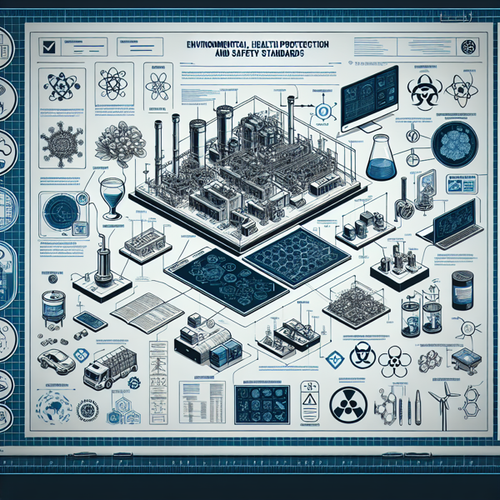
Looking back at May 2025, the Environment, Health Protection, and Safety sector saw a notable set of standards published, spanning critical areas such as fire safety in building construction, asset management best practices for wastewater systems, and harmonized methods for classifying plastics waste. In total, five major standards were released or updated this month, each reflecting both evolving regulatory expectations and the industry’s emphasis on resilience, sustainability, and operational quality. For professionals committed to regulatory compliance and organizational improvement, this retrospective offers a concise synthesis of newly formalized requirements, practical insights, and sector-wide trends that dominated May 2025.
Monthly Overview: May 2025
May 2025 was marked by robust activity across the Environment, Health Protection, and Safety landscape, with standards developments addressing both traditional safety topics (fire resistance in buildings) and newer priorities such as resource recovery and infrastructure resilience. Notably, the month featured the release of updated and new parts in internationally recognized standards families, underlining an industry-wide shift towards risk-based management and circular economy models. Compared to earlier publication cycles, May’s portfolio was distinguished by its focus on harmonizing technical criteria and data exchange between stakeholders (particularly in the plastics and water infrastructure arenas), coupled with a reaffirmation of foundational test methods for safety-critical building elements. The balance between environmental protection and health-and-safety engineering continues to define the direction of regulatory frameworks, as evidenced by the standards summarized below.
Standards Published This Month
ISO 834-1:2025 - Fire-Resistance Tests – Elements of Building Construction – Part 1: General Requirements
Fire-resistance tests – Elements of building construction – Part 1: General requirements
This latest edition of ISO 834-1 serves as the cornerstone for assessing the fire resistance performance of various types of building components under standard fire exposure conditions. The standard specifies the test methods required to determine how construction elements (such as walls, floors, beams, and columns) perform when subjected to temperature-time curves representative of actual fire scenarios. The document sets forth the instrumentation, specimen preparation, loading, restraint/boundary conditions, and detailed test procedures to ensure reliable assessment.
Key requirements include the definition of acceptance criteria based on loadbearing capacity, integrity, and insulation, alongside strict mandates for the calibration and accuracy of test equipment. ISO 834-1:2025 also details the reporting structure for test results, enabling uniform classification and comparison in regulatory or procurement contexts. This revision replaces the 2021 edition, incorporating advancements in equipment specification and clarifying ambiguities in performance evaluation.
Organizations responsible for building design, construction, materials production, and regulatory compliance—especially those operating in fire safety engineering or civil infrastructure—are required to adhere to this standard. The update ensures international consistency and compatibility with evolving building codes.
Key highlights:
- Defines comprehensive fire-resistance testing procedures for all major construction elements
- Establishes uniform criteria and reporting formats for fire safety validation
- Essential for compliance with building codes and specification in procurement
Access the full standard:View ISO 834-1:2025 on iTeh Standards
ISO/TR 24589-2:2025 - Examples of Good Practice for the Management of Assets of Water Supply and Wastewater Systems – Part 2: Wastewater Systems
Examples of good practice for the management of assets of water supply and wastewater systems – Part 2: Wastewater systems
ISO/TR 24589-2:2025 collects real-world examples and best practices that supplement the asset management guidance in ISO 24516-3 and ISO 24516-4. With a focus on wastewater infrastructure, this technical report covers the strategies, operational models, and decision-making frameworks necessary to maximize value and reliability from existing assets such as sewerage networks, pumping facilities, and treatment plants.
Key guidance areas include maintenance strategies, renewal decisions, condition assessments using CCTV and non-destructive techniques, hydraulic modeling, and use of Failure Mode, Effects and Criticality Analysis (FMECA). The document also compares international practices (e.g., Australian context for CCTV inspections and odour management), and highlights the benefits of integrated information systems and dynamic process optimization.
Targeted primarily at utility asset managers, municipal operators, engineers, and consultants, the report offers actionable lessons to improve service reliability, optimize lifecycle costs, ensure regulatory compliance, and introduce sustainable rehabilitation or renewal activities. Annex A provides a useful table summarizing all example practices.
Key highlights:
- Demonstrates effective strategies for risk-adjusted, value-focused asset management
- Includes practical examples for maintenance, inspection, and renewal of wastewater assets
- Supports alignment with ISO 24516 series and international best practices
Access the full standard:View ISO/TR 24589-2:2025 on iTeh Standards
EN 15347-2:2025 - Plastics – Sorted Plastics Wastes – Part 2: Quality Grades of Sorted Polyethylene (PE) Wastes and Specific Test Methods
Plastics – Sorted plastics wastes – Part 2: Quality grades of sorted polyethylene (PE) wastes and specific test methods
EN 15347-2 brings much-needed clarity to the classification and trade of sorted polyethylene (PE) waste by establishing uniform quality grades and the corresponding test methods necessary for transparent transactions. The standard presents a two-tiered documentation approach: required data—essential characteristics to be declared for every batch—and optional data, which suppliers and receiving parties can mutually agree upon. It considers factors such as origin, polymer content (HDPE, LDPE), sector of application (packaging, construction, agriculture), impurities (metals, cardboard, hazardous waste), and physical attributes (colour, form).
Notably, the set of required and optional characteristics supports effective material specification and quality assurance during waste trading and recycling. The standard is a key reference for recycling companies, waste management firms, material traders, and regulations seeking to harmonize environmental protection with market needs.
Key highlights:
- Defines clear, standardized grades for PE waste to ensure recyclability
- Outlines specific test methods for quality control in PE waste supply chains
- Facilitates compliance with European environmental directives and market harmonization
Access the full standard:View EN 15347-2:2025 on iTeh Standards
EN 15347-3:2025 - Plastics – Sorted Plastics Wastes – Part 3: Quality Grades of Sorted Polypropylene (PP) Wastes and Specific Test Methods
Plastics – Sorted plastics wastes – Part 3: Quality grades of sorted polypropylene (PP) wastes and specific test methods
Building on the EN 15347 series, Part 3 addresses the harmonization of classification and testing for sorted polypropylene (PP) waste. The document establishes the framework for grading, declaration, and verification of PP waste properties based on source, sector, composition, and contamination profile. Like its companion standard for PE, EN 15347-3 mandates key characteristics (“required data”), and enables further detail through “optional data” informed by buyer-supplier agreement.
The standard covers PP derived from packaging, construction materials, and demolition activities, facilitating more effective waste sorting, material recycling, and data communication across supply chains. Adhering to this standard benefits waste handlers, recyclers, regulators, and industry stakeholders focused on closing the loop in plastics resource utilization.
Key highlights:
- Delivers standardized criteria and reporting for sorted PP waste
- Supports transparent, efficient recycling transactions
- Aligns with European policy targets for plastics recovery and circular economy
Access the full standard:View EN 15347-3:2025 on iTeh Standards
Common Themes and Industry Trends
Across the five standards issued in May 2025, several salient trends are evident:
- Integration of environmental and safety goals: There is a clear convergence between safety engineering (exemplified by fire resistance standards) and sustainability priorities, particularly evident in the asset management and plastics waste documentation.
- Emphasis on traceability and consistent quality: Both the plastics waste standards demonstrate a drive for harmonized, transparent quality grading, identifying material content, contamination, and appropriate test methods for each batch—reflecting regulatory and market requirements.
- Support for circular economy models: The new standards for sorting and testing plastics waste directly underpin recycling targets and promote material recovery, revealing the sector’s response to policy shifts and consumer demand for responsible sourcing.
- Operational risk and lifecycle management: Best-practice asset management for wastewater reflects a growing maturity in how utilities balance service reliability, lifecycle costs, and infrastructure resilience under increasing environmental and operational pressures.
- International alignment and cross-sector relevance: The standards maintain strong consistency with both European directives and global frameworks, ensuring that industry players can operate across markets with clarity and confidence.
Compliance and Implementation Considerations
For organizations affected by these standards:
- Review applicability: Ensure that your operations, procurement specifications, and technical documentation reference the most current edition of each relevant standard—especially if you are involved in construction, infrastructure, or recycling.
- Prioritize updates: Where standards have been revised (e.g., ISO 834-1:2025), update internal procedures, quality manuals, and training materials to reflect new methods, definitions, or reporting requirements.
- Enhance traceability: For waste handlers and recyclers, invest in data collection and batch documentation aligned with EN 15347-2 and EN 15347-3, and engage with suppliers to institute clear, uniform reporting.
- Build cross-functional engagement: In asset-intensive sectors such as utilities, establish collaboration between asset managers, compliance officers, and operations teams to embed the best practices and monitoring recommended in ISO/TR 24589-2.
- Plan for transition: Review transition timelines or withdrawal dates for superseded standards and coordinate with certification, accreditation, or audit bodies to ensure continued compliance.
- Leverage resources: Consult the iTeh Standards platform for full-text access, guidance, and related documents to support implementation.
Conclusion: Key Takeaways from May 2025
May 2025’s publication cycle in the Environment, Health Protection, and Safety field delivered a comprehensive set of standards addressing some of the most pressing challenges in modern industry: fire safety, infrastructure resilience, and sustainable material management. The revision of foundational standards like ISO 834-1 underscores the ongoing importance of robust building safety regimes, while the introduction of harmonized plastics waste grading and expanded asset management guidance supports a new level of operational effectiveness and environmental responsibility.
Professionals involved in regulatory compliance, risk management, procurement, and strategic planning should closely review these standards, as their adoption will directly affect competitive positioning, operational integrity, and alignment with best practices. Staying current is not simply a matter of regulatory conformance; it is central to maintaining trust with stakeholders, reducing operational risks, and driving sustainable business transformation.
For deeper engagement and access to the authoritative texts, explore each standard directly through the iTeh Standards platform:
- ISO 834-1:2025 - Fire-Resistance Tests
- ISO/TR 24589-2:2025 - Asset Management Examples for Wastewater
- EN 15347-2:2025 - Sorted PE Waste Classification
- EN 15347-3:2025 - Sorted PP Waste Classification
By integrating these standards into your organizational practice, you help shape a safer, more sustainable, and forward-looking sector.
Categories
- Latest News
- New Arrivals
- Generalities
- Services and Management
- Natural Sciences
- Health Care
- Environment
- Metrology and Measurement
- Testing
- Mechanical Systems
- Fluid Systems
- Manufacturing
- Energy and Heat
- Electrical Engineering
- Electronics
- Telecommunications
- Information Technology
- Image Technology
- Precision Mechanics
- Road Vehicles
- Railway Engineering
- Shipbuilding
- Aircraft and Space
- Materials Handling
- Packaging
- Textile and Leather
- Clothing
- Agriculture
- Food technology
- Chemical Technology
- Mining and Minerals
- Petroleum
- Metallurgy
- Wood technology
- Glass and Ceramics
- Rubber and Plastics
- Paper Technology
- Paint Industries
- Construction
- Civil Engineering
- Military Engineering
- Entertainment