


Modern Overcurrent Protection: Understanding Key Fuse and RCD Standards for Safe Electrical Systems
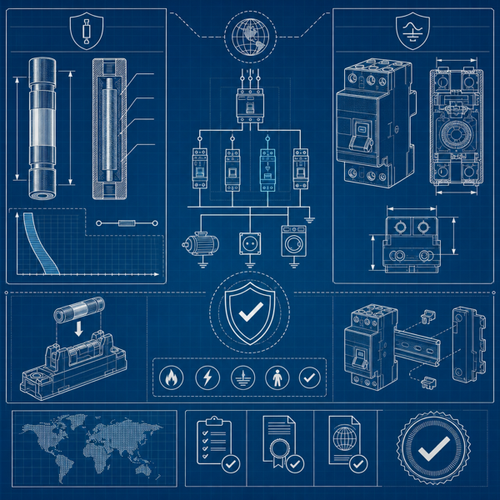
Ensuring electrical safety has never been more important for modern homes, businesses, and public infrastructures. Overcurrent protection devices—such as fuses, circuit-breakers, and residual current-operated protective devices (RCDs)—lie at the heart of safeguarding people, equipment, and investments from the risks of overload, short circuit, and electric shock. This article explores four crucial international standards governing these devices: IEC 60127-6:2014, IEC 60282-2:1995, IEC 60898-1:2015/AMD1:2019, and IEC TR 62350:2006. By understanding and implementing these specifications, organizations not only enhance operational security and scalability but also ensure compliance, boost productivity, and minimize costly downtime or hazards. For any organization serious about growth, safety, and efficiency, these standards are a must.
Overview / Introduction
Electrical engineering is evolving at a rapid pace, with increasing demands on safety, performance, and regulatory compliance. Whether developing consumer electronics, managing industrial power supplies, or installing home circuits, the roles of overcurrent protection devices—such as fuses, circuit-breakers, and RCDs—are more significant than ever.
But installing these devices alone isn’t enough. Each component must meet rigorous international standards to guarantee reliable operation and universal compatibility. This article will provide:
- An accessible overview of four key IEC standards for fuses, fuse-holders, high-voltage expulsion fuses, circuit-breakers, and RCDs
- Key requirements, target users, and practical implementation guidance
- Insights into how compliance drives business value, safety, and scaling
- Direct access to the authoritative texts via iTeh Standards (https://standards.iteh.ai)
Whether you’re an engineer, facility manager, manufacturer, or curious homeowner, understanding these standards is critical for safer, smarter, and more productive operations.
Detailed Standards Coverage
IEC 60127-6:2014 - Fuse-Holders for Miniature Fuse-Links
Miniature fuses – Part 6: Fuse-holders for miniature fuse-links
Scope and Purpose:
This standard defines the requirements for fuse-holders used with miniature cartridge and sub-miniature fuse-links, specifically those intended for indoor appliances and electronic equipment protection. Fuse-holders are vital as they ensure correct positioning, safe replacement, and continuous electrical contact for fuses, preventing accidental contact with live parts and maintaining robust circuit protection.
Key Requirements and Specifications:
- Applies to fuse-holders with up to 16 A rated current and up to 1,500 V DC or 1,000 V AC
- Covers safety, mechanical, thermal, and electrical properties, plus compatibility with IEC 60127-2 and IEC 60127-3 fuse-links
- Details requirements for protection against electric shock (categories PC1, PC2, PC3), clearances, creepage distances, endurance, and environmental resistance
- Includes significant updates from previous editions, such as the new glow-wire ignition test, changes to test arrangements, and updates to gauge sizes
Who Needs to Comply:
Manufacturers, importers, and users of electrical appliances, electronic equipment, or their parts, especially those designing or specifying overcurrent protection components must ensure conformance for product certification, safety labeling, or regulatory acceptance.
Practical Implications:
- Ensures compatibility and safety for fuse-holder installations, reducing risk of failure or non-compliance
- Supports safer maintenance and replacement
- Facilitates international market access by aligning equipment with globally accepted requirements
Notable Features:
- Comprehensive classification and marking systems for fuse-holders
- Rigorous type-testing and gauge specifications for compatibility
- Enhanced fire safety through glow-wire and needle-flame tests
Access the full standard:View IEC 60127-6:2014 on iTeh Standards
IEC 60282-2:1995 - High-Voltage Expulsion Fuses
High-voltage fuses – Part 2: Expulsion fuses
Scope and Purpose:
IEC 60282-2:1995 sets the benchmark for expulsion fuses used in alternating current systems above 1,000 V. These fuses are essential for electrical distribution networks, industrial plants, and large infrastructure, acting as primary protection against overloads and fault currents.
Key Requirements and Specifications:
- Applies to both indoor and outdoor expulsion fuses operating at 50 or 60 Hz
- Details classification, designation, electrical characteristics, service conditions, and required performance
- Specifies test procedures for dielectric strength, breaking capacity, time-current characteristics, temperature rise, and mechanical endurance
- Covers marking, installation, and information obligations for manufacturers
Who Needs to Comply:
- Utilities, industrial operators, switchgear producers, electrical contractors, and infrastructure managers involved with high-voltage networks or substations
Practical Implications:
- Enables safe, reliable fault interruption at high voltage, protecting critical assets
- Facilitates unified testing and replacement across international markets
- Provides application guidance and informs installation best practices for various environments
Notable Features:
- Prescribed altitude and temperature correction factors
- Requirements for insulation levels and electromagnetic compatibility
- Guidance covering special cases not otherwise addressed
Access the full standard:View IEC 60282-2:1995 on iTeh Standards
IEC 60898-1:2015/AMD1:2019 - AC Circuit-Breakers for Overcurrent Protection
Electrical accessories – Circuit-breakers for overcurrent protection for household and similar installations – Part 1: Circuit-breakers for a.c. operation (Amendment 1)
Scope and Purpose:
This standard amendment addresses circuit-breakers designed for alternating current (AC) operation in household and similar settings, focusing on protection from overcurrents—including overloads and short circuits. It adds important clarifications and updates regarding marking, construction, dielectric testing, and insulation requirements.
Key Requirements and Specifications:
- Relates to AC circuit-breakers up to specified voltage and current ratings for consumer and light commercial installations
- Specifies required clearances, creepage distances, insulation performance, marking durability, and terminal construction
- Details updated requirements for electromagnetic compatibility
- Sets robust humidity, mechanical, and dielectric test procedures for type and routine verification
Who Needs to Comply:
Manufacturers and installers of distribution boards, circuit-breaker assemblies, panel boards, and power management systems for residential, commercial, and mixed-use buildings.
Practical Implications:
- Guarantees safety and performance under typical and harsh installation conditions
- Enables durable, user-friendly maintenance and reliable protection for household power
- Supports compliance with international installation practices and marketplace access
Notable Features:
- Enhanced marking and construction guidance for product reliability
- Extended testing protocols for insulation and environmental factors
- Explicit guidance for pollution degree and overvoltage category environments
Access the full standard:View IEC 60898-1:2015/AMD1:2019 on iTeh Standards
IEC TR 62350:2006 - Correct Use of RCDs
Guidance for the correct use of residual current-operated protective devices (RCDs) for household and similar use
Scope and Purpose:
Unlike prescriptive standards, this technical report offers comprehensive, practical guidance on installing, operating, and maintaining RCDs to maximize protection against electric shock, equipment damage, and fire risk. It focuses on both the reliability of the devices themselves and the impact of installation and usage environments.
Key Requirements and Specifications:
- Clarifies the role and failure rates of RCDs, lifespan considerations, and how their reliability is affected by testing, environmental conditions, and design choices
- Recommends test and maintenance routines (including use of the test button)
- Offers best-practice guidelines for selection, installation, handling harsh environments, and avoiding unwanted tripping
Who Needs to Comply:
Designers, installers, facility managers, safety authorities, and end-users managing electrical installations that require RCDs for personal and fire safety
Practical Implications:
- Ensures proactive detection of earth faults, reducing the risk of electrocution and fire
- Informs smarter design and ongoing maintenance to maximize uptime and minimize nuisance interruptions
- Encourages periodic verification to maintain high protection availability throughout the installation’s life
Notable Features:
- Failure modes and contributing factors to RCD performance
- Recommendations to safeguard against harsh environmental impacts
- Guidance on matching RCDs to applications and user needs
Access the full standard:View IEC TR 62350:2006 on iTeh Standards
Industry Impact & Compliance
The implications of these overcurrent protection device standards extend far beyond regulatory box-ticking. Businesses and professionals who adopt and enforce these standards realize tangible benefits, including:
- Risk Reduction: Robust overcurrent and earth fault protection dramatically lowers the likelihood of electrical fires, loss of assets, and injury—keeping people and property safe.
- Market Access: Products certified to IEC standards can be easily sold or installed globally, reducing trade barriers and supporting international partnerships or contracts.
- Operational Uptime: Quality components and proper installation according to standards minimize unplanned outages and costly repairs, sustaining productivity.
- Scaling Infrastructure: Consistency of standards across sites and jurisdictions simplifies expansion, upgrade, and integration projects for growing organizations or facilities.
- Legal and Insurance Compliance: Demonstrating adherence protects organizations from legal jeopardy and can facilitate favorable insurance terms.
Risks of Non-Compliance: Failure to comply with these standards may expose organizations to:
- Regulatory penalties and product recalls
- Liability for injuries or property damage
- Increased downtime due to preventable failures or outages
- Reputational harm impacting business opportunities
In today’s regulatory and risk landscape, proactive compliance is an operational must—not a mere technicality.
Implementation Guidance
Common Implementation Approaches
- Gap Assessment: Compare current products or installations with standard requirements; identify discrepancies in rated values, construction features, marking, and test procedures.
- Design Integration: Specify compliant fuse-holders, expulsion fuses, circuit-breakers, and RCDs in engineering documents and bills of materials.
- Supplier Verification: Source components with proper IEC markings and certification from reputable suppliers.
- Training: Ensure installers and maintenance staff are familiar with installation, testing, and maintenance methods specific to each device class.
- Testing & Maintenance: Set schedules for type/routine testing, RCD test-button operation, periodic inspection, and equipment replacement as outlined in the standards and technical reports.
- Documentation: Maintain records of inspections, tests, device replacements, and compliance certificates for audits or regulatory review.
Best Practices for Adopting These Standards
- Incorporate standard references directly in project specifications and procurement contracts
- Design for ease of maintenance and periodic testing, especially for RCDs and fuse-holders
- Factor in environmental influences (e.g., temperature, humidity, altitude) during selection
- Consult guides and technical resources to stay updated on amendments or emerging technologies
Resources for Organizations
- The iTeh Standards platform provides the authoritative full texts, updates, and cross-references for all covered standards
- Engage with local electrical authorities or accredited certification bodies for interpretation and conformity assessment
- Leverage manufacturer technical notes, best-practice guides, and continuing education programs
Conclusion / Next Steps
Protecting people, assets, and businesses from electrical hazards requires more than just installing fuses or circuit-breakers. It demands a rigorous, standards-based approach that covers design, installation, verification, and ongoing maintenance. The four international standards discussed—IEC 60127-6:2014, IEC 60282-2:1995, IEC 60898-1:2015/AMD1:2019, and IEC TR 62350:2006—set the foundation for reliable overcurrent and earth fault protection across all sectors.
Key Takeaways:
- Compliance improves safety, reliability, productivity, and global competitiveness
- Standards support long-term scaling and future-proofing in a rapidly evolving technical landscape
- Ongoing maintenance and employee training are vital for sustained protection
Recommendations:
- Evaluate your current electrical protection assets and procedures against the described standards
- Use the linked authoritative standards from iTeh Standards as your reference for best-in-class designs and practices
- Stay proactive—adopt, implement, and periodically revisit standards to foster a safer, more productive tomorrow
Ready to take your business and infrastructure protection to the next level? Explore these standards in full on iTeh Standards and ensure your organization is powered by best-in-class safety, compliance, and operational excellence.
Categories
- Latest News
- New Arrivals
- Generalities
- Services and Management
- Natural Sciences
- Health Care
- Environment
- Metrology and Measurement
- Testing
- Mechanical Systems
- Fluid Systems
- Manufacturing
- Energy and Heat
- Electrical Engineering
- Electronics
- Telecommunications
- Information Technology
- Image Technology
- Precision Mechanics
- Road Vehicles
- Railway Engineering
- Shipbuilding
- Aircraft and Space
- Materials Handling
- Packaging
- Textile and Leather
- Clothing
- Agriculture
- Food technology
- Chemical Technology
- Mining and Minerals
- Petroleum
- Metallurgy
- Wood technology
- Glass and Ceramics
- Rubber and Plastics
- Paper Technology
- Paint Industries
- Construction
- Civil Engineering
- Military Engineering
- Entertainment