


Certification Standards for Cables: Enhancing Safety, Productivity, and Digital Integration
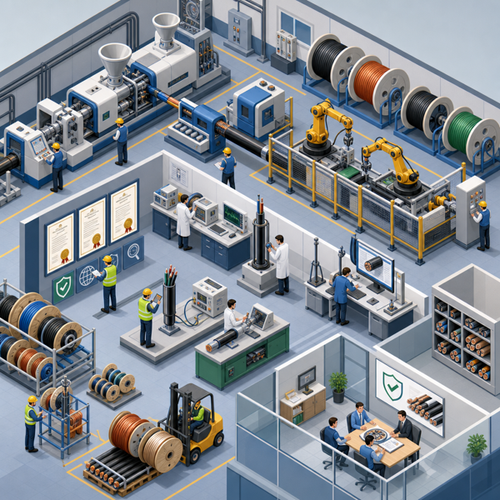
Today's interconnected world relies heavily on safe, reliable, and efficient cable-based systems, not just to move electrical power but to enable interactive digital and multimedia communications across industries. This guide explores four pivotal international standards governing cable certification and performance: IEC 60287-3-3:2007, IEC 60728-2:2018, ISO/IEC 29341-4-11:2011, and ISO/IEC 29341-4-13:2011. In an era of ever-increasing electrical and multimedia infrastructure complexity, compliance with these standards is not a luxury—it's a business imperative.
Across electrical engineering, certification standards for cables underpin workplace safety, support technological scalability, reduce operational risks, and ensure seamless integration in environments from factories and data centers to homes and entertainment venues. For businesses aiming to enhance productivity, security, and flexibility, mastery and application of these standards are must-haves.
Overview / Introduction
Cable infrastructure is the backbone of modern electrical engineering—from high-voltage transmission lines feeding cities to the structured cabling supporting home networks and media streaming devices. As trends like smart automation, digital transformation, and interactive services proliferate, the need for certified cables has never been more pronounced.
Why are standards so critical? Cables don't just transmit power or signals—they also present potential safety hazards, performance limitations, and vulnerability to electromagnetic interference (EMI). Adopting universally recognized specifications, such as those published by IEC and ISO/IEC, ensures that businesses benefit from:
- Enhanced operational safety (minimizing electrical and fire risks)
- System compatibility and interoperability (across devices and manufacturers)
- Scalability for growth and digital transformation
- Optimized productivity through reduced downtime and error rates
- Compliance with regulations and insurance requirements
This article thoroughly examines four critical standards for cable certification, each addressing essential aspects of today’s electrical and information technology landscape. Whether you’re a professional electrician, facility manager, IT integrator, or a business leader seeking to future-proof your operations, you’ll discover practical guidance, implementation strategies, and direct access to official standard documents on iTeh Standards.
Detailed Standards Coverage
IEC 60287-3-3:2007 - Cables Crossing External Heat Sources
Electric cables - Calculation of the current rating - Part 3-3: Sections on operating conditions - Cables crossing external heat sources
IEC 60287-3-3:2007 provides a scientifically validated method to calculate the continuous current-carrying capacity (current rating) of electric cables when they cross or are in proximity to external heat sources. This is crucial for any installation—industrial, commercial, or infrastructure—where cables may be exposed to additional heat from sources such as steam pipes or nearby circuits.
The standard applies to cables of all voltage ratings and types—its universality simplifies cable selection, installation planning, and safety analysis. It offers detailed formulae and methods for:
- Determining derating factors (reduction in permissible current) due to external heat influences
- Calculating thermal resistances for different layouts and soil conditions
- Accommodating single or multiple heat source crossings, including complex cable configurations
- Addressing the impact of parallel and non-parallel crossings, and providing clear limitations where formulas may over-estimate safe current if cables are in direct contact
Who must comply?
- Electrical engineers designing energy distribution systems
- Construction and infrastructure project managers
- Maintenance teams in power plants, refineries, and industrial facilities
- Certification bodies assessing cable installations
Practical Implications:
Following this standard ensures that installed cables do not overheat, reducing risks of insulation breakdown, fire hazards, and unplanned outages. The step-by-step approach enables reliable calculation of derating factors, supporting safer and more efficient design and expansion of electrical systems.
Key highlights:
- Universal method to quantify current derating for any type or voltage cable
- Essential for installations with complex thermal environments
- Supports compliance with safety regulations and insurance requirements
Access the full standard:View IEC 60287-3-3:2007 on iTeh Standards
IEC 60728-2:2018 - Electromagnetic Compatibility for Cable Network Equipment
Cable networks for television signals, sound signals and interactive services - Part 2: Electromagnetic compatibility for equipment
IEC 60728-2:2018 is the definitive international standard for electromagnetic compatibility (EMC) in cable-based transmission of television, audio, and interactive services (like internet and multimedia streaming). In a world awash with wireless signals and ever-increasing data transfer rates, ensuring that cable network equipment neither emits nor falls prey to electromagnetic disturbance is essential for maintaining quality of service and regulatory compliance.
Scope and Requirements:
This standard covers both passive and active network elements:
- Frequency ranges from 150 kHz to 30 MHz for disturbance voltage,
- 5 MHz to 25 GHz for radiated emissions and immunity,
- 5 MHz to 3.5 GHz for screening effectiveness of passive equipment.
It sets stringent limits for:
- Maximum allowed electromagnetic radiation from devices
- Minimum immunity levels to external and internal sources of disturbance
- Minimum screening effectiveness (shielding) for cables and connectors
- Comprehensive test procedures for product conformity assessment
Who should comply?
- Manufacturers and integrators of cable TV, satellite, and internet network equipment
- Broadcasting engineers and telecommunications providers
- Technical planners for residential and commercial multimedia installations
Practical Benefits:
Adhering to this standard ensures high quality, interference-free signal distribution for TV, audio, and interactive media—vital for maintaining customer satisfaction and meeting regulatory obligations. It supports both analog and digital signal environments and reflects the latest changes in electromagnetic spectrum allocation.
Key highlights:
- Extended frequency ranges to meet modern digital and satellite transmission demands
- Comprehensive EMC testing methods for both indoor and outdoor applications
- Specific criteria for co-existence with wireless networks, including the "digital dividend" spectrum
Access the full standard:View IEC 60728-2:2018 on iTeh Standards
ISO/IEC 29341-4-11:2011 - Audio Video Device Connection Management
Information technology - UPnP Device Architecture - Part 4-11: Audio Video Device Control Protocol - Level 2 - Connection Manager Service
ISO/IEC 29341-4-11:2011 standardizes the communication protocols used to manage connections between audio/video devices in Universal Plug and Play (UPnP) environments. This is central to the increasingly digital, interconnected world of smart homes, offices, and multimedia applications.
Scope and Features:
The Connection Manager Service specification provides:
- A common service type to model and manage streaming capabilities of AV devices
- Mechanisms for control points (user interfaces or software) to discover and allocate streams between sources (servers/players) and sinks (renderers/displays)
- Standardized methods for setting up, managing, and tearing down media connections using protocols like HTTP, RTSP/RTP, and vendor-specific streaming
- Support for both analog and digital data transfer, facilitating seamless integration across a range of device types
Who should comply?
- Manufacturers and developers of networked multimedia devices
- Smart home system integrators and IoT platform developers
- AV network engineers and installers
Business and Technical Value:
Implementing this protocol ensures interoperability and future-proofing for digital AV solutions, reduces development costs by leveraging a proven framework, and supports dynamic media environments where devices can enter or leave the network unpredictably.
Key highlights:
- Enables seamless device-to-device media streaming across different brands
- Standardized API for automated setup and teardown of AV connections
- Essential for certification of smart home and networked entertainment devices
Access the full standard:View ISO/IEC 29341-4-11:2011 on iTeh Standards
ISO/IEC 29341-4-13:2011 - AV Device Rendering Control
Information technology - UPnP Device Architecture - Part 4-13: Audio Video Device Control Protocol - Level 2 - Rendering Control Service
ISO/IEC 29341-4-13:2011 further extends the reach of UPnP interoperability by defining the Rendering Control Service for audio/video devices. This protocol enables granular control over rendering attributes—like volume, brightness, contrast, and presets—paving the way for higher-quality, intelligent multimedia experiences in connected environments.
Application and Specifications:
- Allows control points (user devices or apps) to discover and adjust device attributes
- Enables retrieval and modification of settings such as brightness, contrast, audio volume, equalizer presets, color temperature, and more
- Provides a uniform, manufacturer-independent method to deliver, retrieve, and restore presets for AV output
Who should implement this standard?
- Developers building smart TVs, networked speakers, and multimedia hubs
- System integrators enabling device orchestration in smart buildings and entertainment centers
- Certification labs and quality assurance for AV device manufacturers
Benefits for Users and Businesses:
By following this standard, organizations achieve consistent AV device behavior across diverse equipment, easier upgrades, simplified user control, and enhanced customer satisfaction. It's crucial for scalable, multi-device and voice-activated home automation.
Key highlights:
- Standardizes control interfaces for AV device attributes
- Supports device flexibility, scalability, and system expandability
- Integral to robust, multi-brand digital media environments
Access the full standard:View ISO/IEC 29341-4-13:2011 on iTeh Standards
Industry Impact & Compliance
Why Cable Certification Standards Matter More Than Ever
Modern businesses depend on reliable cable infrastructure for everything from basic power distribution to complex, integrated communications. Certification to standards such as IEC 60287-3-3:2007 and IEC 60728-2:2018 is rapidly moving from recommended best practice to contractual or even legal necessity. Similarly, standards like ISO/IEC 29341-4-11 and ISO/IEC 29341-4-13 are now critical to interoperability and user experience in digital AV networks.
Compliance advantages include:
- Meeting legal and insurance requirements for large-scale installations
- Minimizing operational and safety risks
- Future-proofing technology investments
- Enhancing network and multimedia system reliability
- Reducing troubleshooting and maintenance costs
Failure to comply exposes organizations to risks such as equipment failure, regulatory penalties, injury or loss of insurance coverage, and significant loss of reputation following service outages or safety incidents.
Implementation Guidance
Steps to Achieving Certified Cable Installations
Gap Analysis:
- Review your current installations and product portfolios against each standard’s requirements.
- Identify gaps in current practice and areas for updates.
Specification and Procurement:
- Write project and purchasing specs to require compliance with relevant standards and verified third-party certification.
- Use certified cables and equipment where possible.
Installation Planning:
- Integrate standard-based calculations (for example, IEC 60287-3-3 derating factors) into plans and cable layouts.
- Consider environmental and operational conditions thoroughly (temperature, proximity to other heat sources, expected electromagnetic conditions, etc.).
Testing and Verification:
- Employ procedures spelled out in standards like IEC 60728-2 for EMC performance, and reference manufacturer-provided test certifications for digital equipment compliance (ISO/IEC 29341 standards).
Documentation and Training:
- Keep all documentation regarding compliance, test results, and product certifications up to date.
- Train engineering and maintenance staff on the operational and safety implications of standards compliance.
Continuous Improvement:
- Stay abreast of standards updates via platforms like iTeh Standards, and adjust practices accordingly.
Best Practices
- Use only verified and certified third-party testing providers for compliance assessments.
- Engage with manufacturers who can supply up-to-date certificates and compliance statements.
- Where possible, automate compliance tracking and document management.
- Build flexibility into your specification and installation approach to facilitate updates or upgrades as standards evolve.
Conclusion / Next Steps
As technology, safety, and interoperability demands increase, the role of cable certification standards only grows. Each of the standards reviewed—IEC 60287-3-3:2007, IEC 60728-2:2018, ISO/IEC 29341-4-11:2011, and ISO/IEC 29341-4-13:2011—addresses vital aspects for businesses seeking scalable, future-ready, and secure electrical and digital infrastructure.
By implementing and maintaining compliance with these global standards, organizations can:
- Increase productivity and system uptime
- Ensure legal and insurance compatibility
- Achieve superior safety and reduce liability
- Seamlessly scale up digital and interactive services over robust cable networks
Next steps:
- Conduct a thorough assessment of your current practices and installations in light of these standards
- Integrate standard requirements into your project, procurement, and operational procedures
- Keep staff informed and trained as standards evolve
- Access official documents through iTeh Standards and stay updated for future enhancements
Staying compliant, safe, and ahead of the curve is an investment in your organization's resilience and reputation. Explore the full standards on iTeh Standards to get started on the journey of certification and continuous improvement.
Categories
- Latest News
- New Arrivals
- Generalities
- Services and Management
- Natural Sciences
- Health Care
- Environment
- Metrology and Measurement
- Testing
- Mechanical Systems
- Fluid Systems
- Manufacturing
- Energy and Heat
- Electrical Engineering
- Electronics
- Telecommunications
- Information Technology
- Image Technology
- Precision Mechanics
- Road Vehicles
- Railway Engineering
- Shipbuilding
- Aircraft and Space
- Materials Handling
- Packaging
- Textile and Leather
- Clothing
- Agriculture
- Food technology
- Chemical Technology
- Mining and Minerals
- Petroleum
- Metallurgy
- Wood technology
- Glass and Ceramics
- Rubber and Plastics
- Paper Technology
- Paint Industries
- Construction
- Civil Engineering
- Military Engineering
- Entertainment